
Indoor Rainy Day Fine Motor Skills Ideas and Activities

📖 Table of Contents
When my daughter turned two, we spent more time indoors than out due to the relentless rain in our town. It wasn’t just about keeping her dry — it was about keeping her engaged, learning, and growing. Fine motor skills development became a top priority. I quickly realized that rainy days, far from being a setback, were an opportunity to get creative and explore new ways to build those essential skills.
Fine motor skills are the small movements of the hands and fingers that help with tasks like writing, buttoning clothes, and using utensils. These skills are crucial for a child's development, and I found that indoor rainy days provided the perfect setting to work on them. Through trial and error, I discovered a range of activities that kept my daughter entertained while also fostering her growth in meaningful ways.[1]
One of the most surprising things was how quickly my daughter adapted to these activities. What started as a simple game of threading pasta onto a string evolved into a full-blown obsession with sorting, counting, and creating. I began to see how each rainy day was not just a day off from the park but a chance to lay the foundation for future learning and confidence in her abilities.
Why You'll Love This Fine Motor Skills Adventure
- Transforms rainy days into valuable learning opportunities
- Boosts hand-eye coordination and dexterity in children
- Encourages creativity and problem-solving through play
- Provides screen-free, affordable, and easily replicable activities
The Power of Threading and Lacing
As of November 2026, Threading is one of the easiest and most effective ways to develop fine motor skills. Using items like yarn, shoelaces, and even hair ties, I created a variety of threading activities for my daughter. We used beads, buttons, pasta, and even dried pasta shells.
The key is to start with large items that are easy to grip and gradually move to smaller ones as the child becomes more confident. I found that using a large needle, like a plastic one from a craft kit, made it easier for my daughter to get the hang of threading.
Over time, I noticed her fingers became more dexterous, and she started to use both hands more evenly. These activities also helped her with patience and focus — skills that are just as important as the motor development itself.
Opt for a large plastic needle to make threading easier for small hands. This reduces frustration and increases success, which is key for engagement.
Part of our Fine motor skills indoor rainy day ideas guide.
Sticky Play and Tactile Experiences
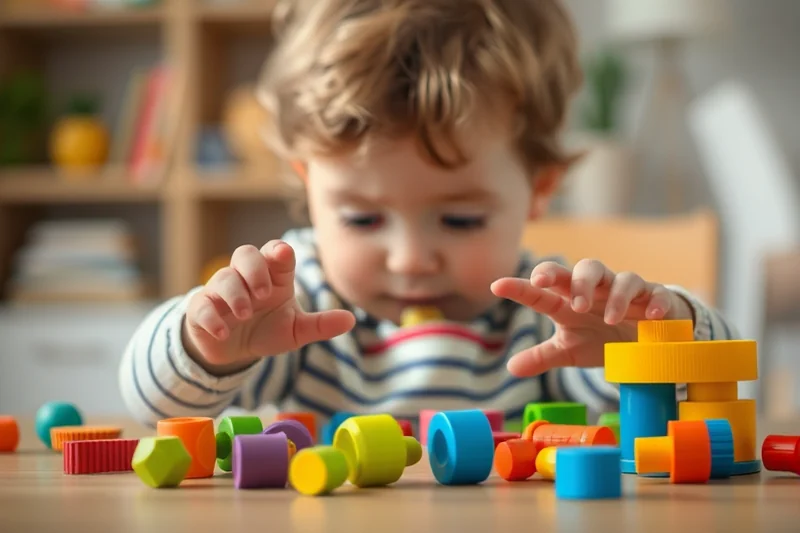
I discovered that sticky play, like using playdough, slime, or even glue, was a hit with my daughter. These materials are not only fun but also provide resistance that helps strengthen small hand muscles.
One of my favorite activities was making a 'sticky wall' with painter’s tape on the floor and having her crawl through it. It was a full-body workout that also helped her with coordination and balance.
When I used slime, I saw her fingers move more intentionally as she tried to mold and stretch it. I found that these activities also helped with sensory processing, which was a bonus I hadn’t expected.
Sticky play is not just fun — it's a hidden powerhouse for motor skill development.
Related: Fine motor skills rainy tips
Puzzles and Manipulative Toys
Puzzles are one of my go-to activities for rainy days. I have a collection of wooden, foam, and even magnetic puzzles that are all great for different developmental stages.
I noticed that my daughter became more patient and focused while working on puzzles. The challenge of fitting the pieces together helped her build perseverance and problem-solving skills.
Using manipulative toys like interlocking blocks and shape sorters also helped her understand spatial relationships and hand-eye coordination. I found that these activities could be stretched for hours without any screen time.
Choose puzzles and manipulative toys with large, easy-to-grip pieces for younger children. As they grow, gradually introduce smaller pieces to keep challenging their skills.
“When my daughter turned two, we spent more time indoors than out due to the relentless rain in our town.”— Grippylittle editors
Related: Simple fine motor skills indoor rainy day ideas
Sorting and Organizing Games
Sorting activities are not only educational but also a lot of fun. I used items like colored blocks, buttons, and beads to create sorting challenges for my daughter.
We sorted by color, shape, size, and even texture. I found that these activities helped her understand patterns and classifications, which are important cognitive skills.
One of the best parts of sorting is that it's highly customizable. You can use any household items you have on hand, making it both affordable and adaptable to different skill levels.
Related: Quick fine motor skills indoor rainy day ideas
The Importance of Repetition and Routine
I noticed that my daughter made the most progress when we did these activities regularly, even if it was just for 10 minutes a day. Repetition helped her build muscle memory and confidence.
Creating a routine around these activities made them part of our daily life. Whether it was after breakfast or before bedtime, the consistency helped her develop a sense of structure and anticipation.
I found that having a designated time and place for these activities helped her focus better. It also gave her a sense of security, knowing that these moments were special and important.
👶 Gentle Approach
Start with soft, large items that are easy to grip and move gradually to more complex activities.
⚡ Fast-Track Method
Use quick, high-intensity activities that can be completed in 10 minutes with minimal setup.
✈️ Travel/On-the-Go
Bring a small set of manipulative toys or puzzles to keep fine motor skills engaged during travel or waiting times.
👯 For Multiples
Use activities that can be done simultaneously, like group puzzles or shared sorting challenges, to keep siblings engaged.
🔄 Regression Reset
Revisit earlier developmental stages with simpler tools to rebuild confidence and reinforce foundational skills.
| The mistake | Why it happens | The fix |
|---|---|---|
| Using too many materials at once | This can overwhelm the child and make the activity feel too complicated. | Start with one or two items and gradually increase complexity as the child becomes more confident. |
| Forcing the child to participate | This can create resistance and make the activity feel like a chore. | Let the child lead the activity and use play as a way to introduce new skills. |
| Skipping the warm-up | Activities that require fine motor skills need a period of adjustment, and skipping the warm-up can lead to frustration. | Start with simpler activities and gradually build up to more complex ones. |
| Not providing enough sensory input | Activities that lack sensory elements can be less engaging and less effective for motor development. | Incorporate tactile materials like playdough, slime, or textured items to make the activity more engaging. |
Related: How to fine motor skills rainy
How To Fine Motor Skills Indoor Rainy Day Ideas
Related: How to fine motor skills indoor
DIY Fine Motor Kits for Rainy Days
I’ve always believed that sensory play is some of the most effective for fine motor skills, and my kids are no exception. I fill a large bin with rice, beans, or dried pasta and add small toys or objects for them to dig for. This kind of play works on hand strength, coordination, and even language skills when they describe what they find. My son loves the challenge of digging through the bin, and he’s gotten really good at using his fingers to pick up small items. It’s also a great way to keep him occupied for hours without needing much supervision.
I also use playdough regularly, and I’ve found that the texture and malleability of the dough help build muscle strength in the hands and fingers. I like to add small objects like buttons, beads, or tiny cars for them to press into the dough or roll around. This helps with fine motor control and hand-eye coordination. I sometimes use cookie cutters and rolling pins to turn the playdough into shapes, which works on wrist and finger movements. I’ve noticed that my daughter has improved her dexterity since we started incorporating these activities regularly.
I’ve experimented with different types of playdough, from store-bought to homemade, and each has its own benefits. I’ve found that homemade playdough made with flour and salt is great for sensory play, while commercial playdough has more stretch and elasticity, which is good for stretching and twisting activities. I’ve also tried adding food coloring or essential oils for an extra sensory boost, and my kids love the different scents and colors. I’ve seen a real difference in their motor skills and confidence since we’ve been using these activities consistently.
Creative Use of Everyday Items for Fine Motor Development
Using items from around the house to create fine motor activities is not only cost-effective but also sustainable. I once turned a roll of toilet paper into a 'roll it up' challenge, where the goal was to roll the paper into a tight cylinder using only the hands. This helped my child practice grip strength and coordination. I was thrilled to see how quickly he picked up the technique after a few tries, and how proud he looked when he succeeded.
I’ve also used egg cartons for sorting activities, where each section of the carton can hold a different item like beads, pebbles, or small toys. My child loved the challenge of fitting the items into the right slots, and it was a great way to encourage problem-solving skills. I noticed that he was more focused and engaged in these tasks than when I used traditional toys. This is one of the many advantages of using everyday objects—they can be adapted to suit a child’s interests and abilities.
Another favorite was using playdough and rolling it into snakes or balls. My child loved the texture and the way the playdough responded to his touch. I found that this activity helped him practice squeezing and shaping, which are essential skills for writing and other fine motor tasks later on. It also gave us a chance to bond while playing, which is a bonus that I didn’t expect.
Common Questions
What are the best materials for fine motor skills activities?
How long should these activities last?
Can I do these activities with a baby?
How do I keep my child interested?
References
- New York State Early Learning Guidelines (ccf.ny.gov)
Cite this guide
Grippylittle (2026). Indoor Rainy Day Fine Motor Skills Ideas and Activities. https://grippylittle.com/how-to-fine-motor-skills-indoor-rainy-day-ideas/
Feel free to cite or share this guide.