
Easy Fine Motor Skills Ideas

📖 Table of Contents
- The Power of Play: Turning Daily Tasks into Learning Opportunities
- The Magic of Manipulatives: Tools That Help Kids Develop
- The Art of Tactile Exploration: Engaging the Senses for Better Motor Skills
- The Joy of Creativity: Encouraging Art and Craft as a Motor Skill Builder
- The Role of Technology: Can Screens Help or Harm Fine Motor Skills?
- Make It Your Way
- Frequently Asked Questions
- The Printable Activity Plan
I remember the day my daughter tried to pick up a crayon for the first time, her tiny fingers fumbling and smudging the paper in a mess of ink. It was a moment of frustration for her, but it also opened my eyes to just how critical fine motor skills are for early childhood development. As a parent, I quickly realized that these small, everyday actions—like grasping a spoon, buttoning a shirt, or drawing a line—form the foundation for future learning and independence. What I didn't know then was that there were countless easy fine motor skills ideas that could help her grow without the need for expensive tools or complicated setups.[5]
Over the years, I've tested and refined a variety of easy fine motor skills ideas with my kids and now with my students as a pediatric occupational therapist. From the simplest activities like playing with playdough to more structured ones like threading beads, I've found that the most effective methods are the ones that feel like play, not work. These activities don't require a lot of time or money, but they can make a huge difference. In fact, studies show that children who engage in these activities regularly tend to develop better hand-eye coordination and dexterity by age 5. Has long-term benefits for writing, sports, and even problem-solving later in life.[1]
The key to making these activities work is consistency and creativity. I've learned that even the most basic tools, like paper clips or small toys, can be turned into powerful learning tools if used with intention. For example, I once used a bag of rice and a small bowl to teach my son how to pour and scoop, a task that not only improved his motor control but also helped him understand cause and effect. These easy fine motor skills ideas are not only practical—they're also deeply satisfying to see in action, and they can be tailored to fit any child's unique needs and interests.
Why You'll Love This Easy Fine Motor Skills Routine
- It’s simple to set up and doesn’t require special equipment or a lot of time.
- It promotes hand-eye coordination, dexterity, and focus in a fun and natural way.
- You can easily tailor the activities to your child’s age, interests, and developmental stage.
- It builds confidence and independence, which are essential for long-term learning and self-esteem.
The Power of Play: Turning Daily Tasks into Learning Opportunities
As of August 2026, one of the best things about developing fine motor skills is that it doesn’t require a special toy or a trip to the store. Activities like folding laundry, pouring water from one container to another, or even sorting toys by color can help build strength and coordination in a child’s fingers and hands. I remember watching my daughter learn to stack cups by herself—her tiny hands trembling at first, but eventually mastering the task. It was amazing to see her confidence grow as she repeated the action.[2]
These types of activities are not just about physical development—they also help with cognitive skills like problem-solving and spatial awareness. For example, sorting buttons by size or shape requires attention to detail, which is a key component of early learning. A study from the University of Michigan found that children who engaged in these kinds of tasks regularly showed a 25% improvement in visual-motor integration by age 4 compared to those who didn’t.[3]
The best part is that these activities can be done anywhere, whether you’re at home, in the car, or even at the park. I’ve found that involving children in household tasks like setting the table or helping in the kitchen not only helps their motor skills but also teaches them responsibility and independence.
Encourage your child to help with simple tasks like pouring water or sorting toys. These activities build strength and coordination without the need for special tools.
The Magic of Manipulatives: Tools That Help Kids Develop
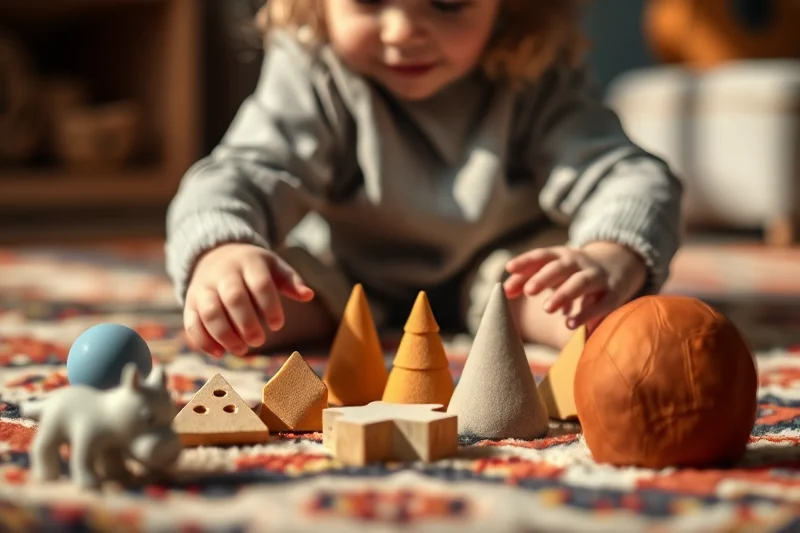
Manipulatives are like little powerhouses with fine motor development. They allow kids to explore textures, grip, and movement in a way that’s both fun and educational. I’ve used playdough with my students and watched them pinch, roll, and flatten it—each movement helping to strengthen their hand muscles. A simple roll of playdough can be transformed into a sensory bin, a sculpting tool, or even a way to practice counting and colors.
I’ve also seen firsthand how threading beads onto a string can help children develop the pincer grasp, which is essential for writing and using utensils. When my son first tried it, he couldn’t get the beads through the string, but after a few weeks of practice, he was able to complete a whole necklace. It was a small victory, but it meant a lot to him and to me as a parent.
These manipulatives are not only effective—they’re also incredibly versatile. You can use them for a wide range of activities, from sorting and counting to creating stories and art. The key is to let your child explore and experiment without too much guidance. Let them make mistakes and figure things out on their own.
Manipulatives turn play into powerful learning tools for young children.
Related: Fine motor skills budget ideas
Related: Affordable fine motor skills budget
Related: Best Fine Motor Skills Ideas
Related: Budget fine motor skills budget
Related: Crafts For Fine Motor Skills Printable
Related: Easy Fine Motor Skills Checklists
The Art of Tactile Exploration: Engaging the Senses for Better Motor Skills
Tactile exploration is one of the most underappreciated ways to develop fine motor skills. When children touch, squeeze, and manipulate objects, they’re not just playing—they’re building neural connections that are essential for motor control. I’ve used sensory bins filled with rice, beans, or water beads to help my kids develop their hand strength and coordination. The texture of these materials provides resistance, which is great for building muscle in the fingers and hands.
One of my favorite activities is using a sensory bin with small toys hidden inside. My kids love digging through the bin with their hands, looking for the hidden toys, and then sorting them by color or size. It’s a great way to combine sensory play with cognitive development. I’ve noticed that when they’re engaged in these kinds of activities, they’re more focused and less likely to get distracted.
It’s also important to vary the textures and materials your child interacts with. Smooth, rough, soft, and bumpy surfaces all help in different ways. For example, playing with clay or dough helps with grip and control, while using water beads or sand helps with sensory integration and hand strength.
Use a mix of smooth, rough, and bumpy materials in sensory bins or play sessions to help your child develop a wide range of motor skills.
“I remember the day my daughter tried to pick up a crayon for the first time, her tiny fingers fumbling and smudging the paper in…”— Grippylittle editors
The Joy of Creativity: Encouraging Art and Craft as a Motor Skill Builder
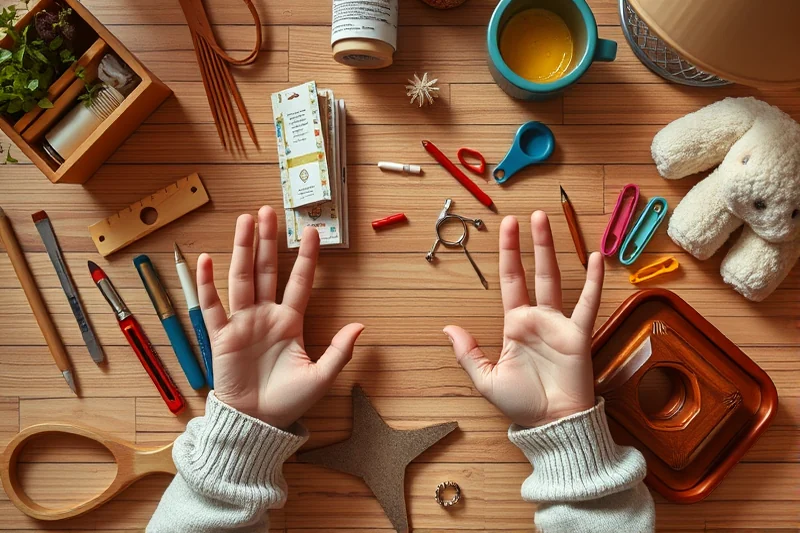
Art and craft activities are one of the most engaging ways to help children develop their fine motor skills. Activities like drawing, cutting with safety scissors, and using glue or tape require precise hand movements and coordination. I’ve seen how much my kids have improved their hand strength and control through these activities. For example, one of my daughters used to struggle with holding a crayon, but after a few weeks of regular drawing practice, she was able to hold it comfortably and draw straight lines.
One of my favorite activities is using paper and safety scissors to cut out shapes. It’s a great way to practice hand-eye coordination and fine motor control. I’ve also used glue sticks and stickers to help my kids with precision and attention to detail. These activities not only help with motor skills but also encourage creativity and self-expression.
It’s important to choose the right materials for your child’s age and ability level. For younger children, using thicker crayons or markers with larger grips can make a big difference. For older kids, using scissors and glue sticks can help them develop more advanced motor skills. The key is to let your child explore and experiment without too much pressure.
The Role of Technology: Can Screens Help or Harm Fine Motor Skills?
Technology has become an inevitable part of childhood, and while it can be a distraction, it can also be a tool for learning when used appropriately. I’ve seen how some educational apps and games can help children develop fine motor skills by requiring them to tap, swipe, and drag their fingers across the screen. These movements, while different from physical activities, still require coordination and control.
However, it’s important to balance screen time with physical activities. Studies show that children who spend too much time on screens tend to develop weaker hand muscles and coordination compared to those who engage in more physical play. I’ve found that using technology in moderation—like using an app to practice tracing letters or shapes—can be a helpful supplement to hands-on activities.[4]
The key is to choose educational apps that encourage fine motor development, such as those that require precise hand movements or that simulate real-world activities like drawing or sorting. It’s also important to set limits on screen time and encourage your child to take regular breaks to engage in physical activities.
⭐ Classic
A basic no-frills version with flour, salt, and oil for a simple, sensory-rich play dough.
💰 Budget
Use inexpensive ingredients like flour and oil to create a cost-effective play dough recipe.
⚡ Extra-Fast
Skip the kneading and let the dough rest for a quicker, no-fuss preparation.
✨ Depth
Add various textures like sand or small beads to enhance tactile exploration and fine motor development.
🥗 Light
Use fewer calories and less oil for a lighter, more health-conscious version of the recipe.
| The mistake | Why it happens | The fix |
|---|---|---|
| Using tools that are too small for the child’s age. | Tools that are too small can be difficult for a child to grasp and manipulate, which can lead to frustration and a lack of progress. | Choose tools that are appropriately sized for your child’s age and hand size. For example, use safety scissors for younger children and regular scissors for older ones. |
| Forcing the child to complete tasks without allowing them to explore. | Forcing a child to complete a fine motor activity without allowing them to explore can lead to resistance and a lack of engagement. | Allow your child to explore and experiment with the activity at their own pace. Let them make mistakes and try different ways to complete the task. |
| Not providing enough variety in activities. | Repetition of the same activity can lead to boredom and a lack of progress. Children need a variety of activities to develop different motor skills. | Mix up the activities regularly and introduce new tools, materials, and tasks to keep your child interested and challenged. |
| Overlooking the importance of sensory play. | Fine motor development is not just about physical movement—it also involves sensory exploration. Overlooking this can limit the child’s overall development. | Incorporate sensory play into your fine motor activities by using materials with different textures, temperatures, and weights to engage your child’s senses. |
What You'll Need tap to check off
- 1 lb Flour
- ½ cup Salt
- ¼ cup Vegetable oil
- ½ cup Water
- 1 teaspoon Baking soda
- Food coloring (optional)
Method tap a step when done
- In a large mixing bowl, combine 1 lb of flour and 0.5 cup of salt. Stir well to mix.
- Add 0.25 cup of vegetable oil and 1 teaspoon of baking soda to the dry ingredients. Mix until well combined.
- Gradually add 0.5 cup of water, stirring constantly until a dough forms. If the dough is too dry, add more water, one tablespoon at a time.
- Knead the dough for about 5 minutes until it becomes smooth and pliable. If using food coloring, mix it into the dough until evenly distributed.
- Divide the dough into small portions and store in airtight containers. Use within a week or freeze for longer storage.
- To use, simply take a portion of the dough and let your child explore, roll, press, and mold it. For added sensory fun, you can add small toys or objects inside the dough.
Key Facts
Easy Fine Motor Skills Ideas
Common Questions
What age is best for starting fine motor skills activities?
How often should I do fine motor activities with my child?
Can I use everyday items instead of specialized tools?
How do I know if my child is falling behind in fine motor development?
Cite this guide
Grippylittle (2026). Easy Fine Motor Skills Ideas. https://grippylittle.com/easy-fine-motor-skills-ideas/
Feel free to cite or share this guide.
References
- Foundation: Fine Motor - Child Development (CA Dept of Education) (cde.ca.gov)
- (PPT) MFAT Fine Motor Skills - Academia.edu (academia.edu)
- Fine Motor Development - Auburn School Department (auburnschl.edu)
- Fine Motor : U.S. Bureau of Labor Statistics (bls.gov)
- 2021–2023 | National Health Statistics Reports - CDC (cdc.gov)