
Best Fine Motor Skills Phases
📖 Table of Contents
The first time my daughter gripped a crayon with both hands and drew a jagged line across the paper, I knew something was shifting. It wasn’t just a mark on the page — it was a milestone in her fine motor development, and one that I hadn’t fully appreciated until that moment. Fine motor skills are the invisible scaffolding that lets kids hold a spoon, tie their shoes, and eventually write their names. But without knowing the phases and how to support them, it’s easy to feel like you’re just watching them fumble around until they ‘get it.’[1]
I’ve spent the last few years tracking my kids’ development, and what I’ve learned is that fine motor skills don’t just appear overnight. They unfold in distinct phases, each with its own set of challenges and opportunities. From the early days of grasping and reaching to the complex coordination of manipulating small objects, these phases are critical for a child’s ability to interact with the world. Understanding them can help parents avoid frustration and guide kids with purpose.[2]
What I’ve also learned is that there’s no one-size-fits-all approach to supporting fine motor development. It depends on the child’s age, their natural tendencies, and the environment you create for them. But by knowing the best fine motor skills phases, you can turn seemingly random play into targeted learning. This is about more than just pincer grip or scissor skills — it’s about laying the groundwork for confidence, independence, and the ability to express themselves in the world.[3]
Why You'll Love This Approach to Fine Motor Development
- You’ll see real, measurable improvements in your child’s coordination and confidence.
- You’ll gain clarity on the natural progression of fine motor skills, so you know when to encourage and when to step back.
- You’ll be equipped with practical, everyday strategies that fit seamlessly into your family’s routine.
- You’ll feel more empowered as a parent, knowing you’re helping your child grow in the most important ways.
The Early Grasping Phase (0–6 months)
As of August 2026, from the moment they’re born, babies begin to explore the world with their hands. At first, their movements are reflexive — like the grasping reflex that causes them to curl their fingers around anything that touches their palms. By around 2 months, they start to intentionally reach for objects, and by 6 months, they can grip and hold things like toys or a bottle. This phase is crucial because it builds the neural pathways that support hand-eye coordination and dexterity.[4]
I remember watching my firstborn try to grab a rattle — he missed it every time, but he kept trying. It wasn’t until he was 4 months old that he finally succeeded. That small victory was huge for his confidence. During this phase, it’s important to provide safe, graspable objects that are easy for babies to hold. Think soft blocks, fabric balls, or anything with a texture that encourages exploration.
There’s no need to rush this phase. It’s about giving them time and space to explore. My advice is to keep objects within reach and let them experiment. If you want to help, sit with them and gently guide their hands toward the objects, but never force it. Let their curiosity lead the way.
Soft, squishy, or bumpy toys help babies develop their sense of touch and build the strength needed for later fine motor skills.
Part of our Fine motor skills troubleshooting phases guide.
The Pincer Grip Phase (6–12 months)
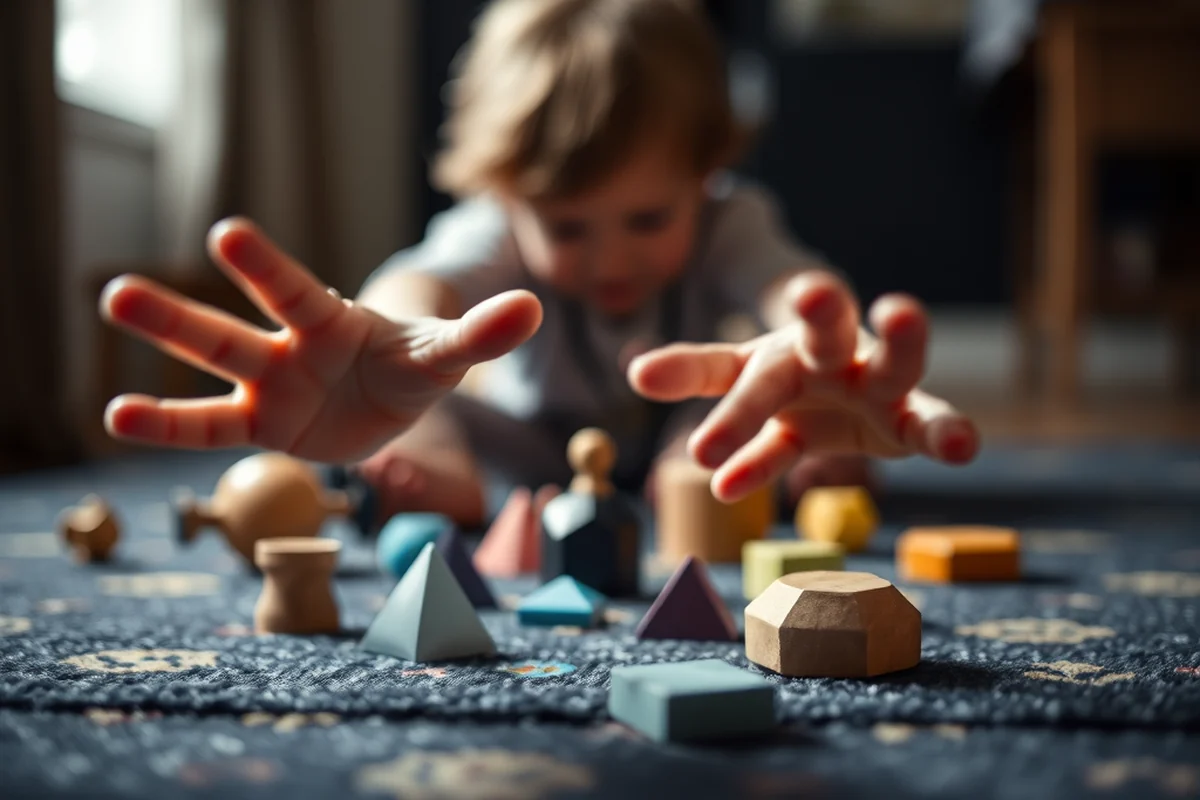
This is the phase where things start to get more precise. Instead of just grabbing with the whole hand, babies start to use their thumb and index finger to pick up small objects — like a Cheerio or a bead. This is the pincer grip, and it’s a game-changer for development. It’s what allows them to manipulate small items, which is essential for tasks like using a spoon, buttoning clothes, and eventually writing.
I remember my daughter struggling to pick up peas with a spoon. She’d get frustrated, but I realized she hadn’t developed the pincer grip yet. Once she started using it, she became much more independent with eating. It’s a common challenge — many parents think their baby is too messy or slow, but that’s just part of the learning process.
To support this phase, provide small, easy-to-grasp objects. Think beads, small blocks, or even pasta. You can also use tongs or tweezers designed for kids to help them practice the pincer grip. Don’t be surprised if they still use their whole hand — that’s normal and part of the process.
The pincer grip is the first step to independence.
Related: Affordable fine motor skills troubleshooting phases
Related: Diy fine motor skills troubleshooting phases
Related: How to fine motor skills troubleshooting phases
Related: Simple fine motor skills phases
Related: Best fine motor skills troubleshooting
The Coordination Phase (12–24 months)
During this phase, toddlers start to refine their hand-eye coordination. They can now use both hands together, which is essential for more complex tasks like drawing, using scissors, or even playing with building blocks. I remember watching my son try to stack blocks — he’d knock them down repeatedly, but with each attempt, he got a little better. It was a slow but steady progression.
This is also the phase where they start to use tools like crayons, markers, or even small kitchen utensils. It’s not about making perfect drawings — it’s about the act of creating. Even if the result is a blob of color, it’s still a win for their fine motor development. What’s important is giving them time to practice and not pushing too hard.
One tip I’ve found useful is to provide a variety of tools. Try crayons, pencils, markers, and even wooden sticks. Let them explore different textures and weights. And remember, this phase is about exploration, not perfection.
Exposing toddlers to different tools helps them develop the strength and coordination needed for more complex tasks.
“The first time my daughter gripped a crayon with both hands and drew a jagged line across the paper, I knew something was shifting.”— Grippylittle editors
The Precision Phase (2–3 years)
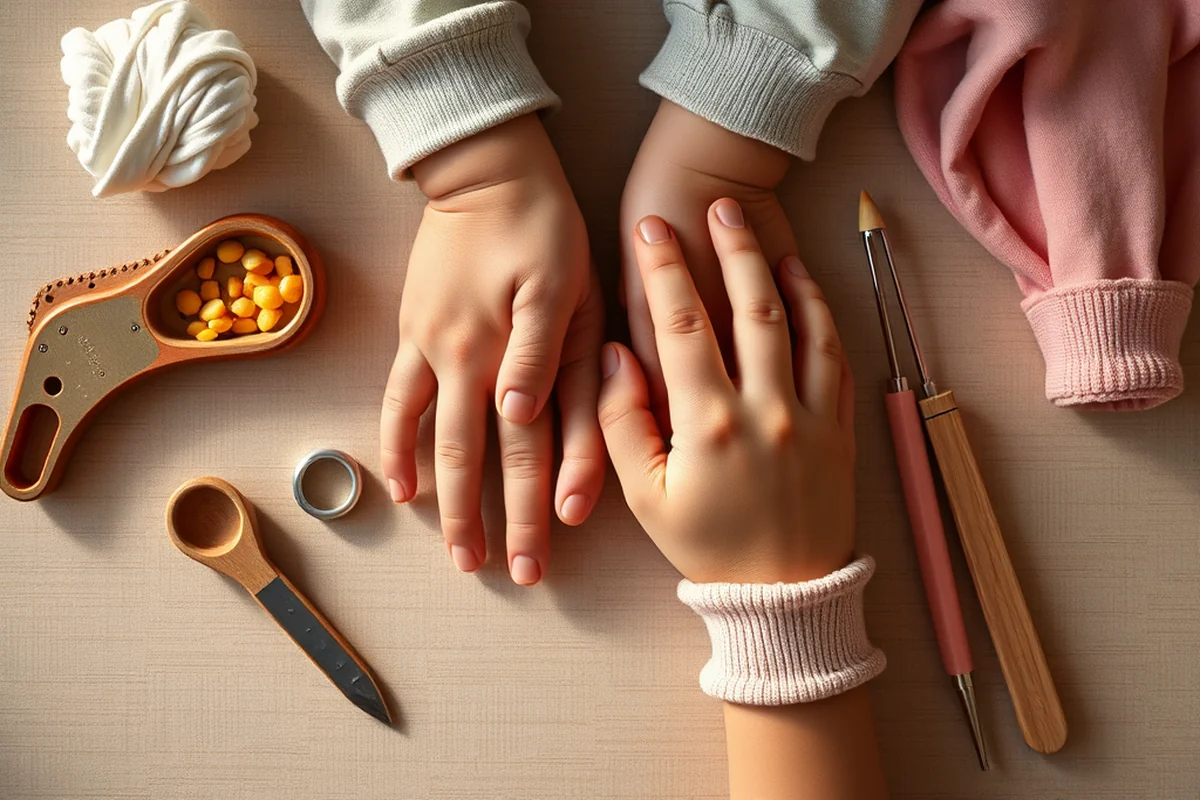
This is when things start to get really precise. Kids begin to use scissors, draw straight lines, and even write their names. I remember watching my daughter practice cutting paper with safety scissors. It took her a while to get the hang of it, but with time and practice, she improved dramatically. This phase is all about building the strength and control needed for more advanced tasks.
It’s important to be patient and let them take their time. Kids at this age are still developing their fine motor skills, and it’s normal for them to make mistakes. What’s more important is encouraging them and providing the right tools. Safety scissors, small crayons, and even tracing paper can help them practice their skills in a safe and supportive environment.
Don’t forget to model the behavior. Kids often imitate what they see. So, when you’re working on a craft or drawing, let them watch you and then try it themselves. It’s a great way to encourage learning through observation and imitation.
The Mastery Phase (3+ years)
This is the phase where things start to click. Kids can now tie their shoes, use scissors more effectively, and even write in cursive. I remember watching my daughter tie her shoes for the first time — it was a huge milestone for her. It wasn’t perfect, but she was proud of herself, and that was the most important part.
At this stage, the focus should be on reinforcing the skills they’ve already developed and challenging them with more complex tasks. Think of things like threading beads, using more advanced scissors, or even playing with small puzzles. These activities help build the dexterity and coordination needed for school and beyond.
It’s also important to encourage independence. Let them try things on their own, even if it takes longer. It might be frustrating at times, but with time and practice, they’ll get better. And remember, even the most skilled kids can have off days — it’s all part of the process.
👶 Gentle Approach
For parents who prefer a slow, low-pressure way of supporting fine motor development.
🚀 Fast-Track Approach
Ideal for parents who want to accelerate skill development through structured activities.
✈️ Travel/ Away-from-Home Approach
Perfect for families who need portable, no-prep activities to keep kids engaged on the go.
👯♀️ Multiples Approach
Tailored for parents of twins or multiples, with activities that can be done simultaneously.
🔄 Regression Reset Approach
For parents who want to help kids regain lost skills or build confidence after a setback.
| The mistake | Why it happens | The fix |
|---|---|---|
| Forcing a child to use their hands in a way that feels uncomfortable. | Forcing a child can create anxiety and reduce their willingness to try new activities. Fine motor development should be a fun and natural process. | Let your child explore at their own pace. Use gentle encouragement rather than pressure. |
| Providing too many or too few opportunities for practice. | Too much can be overwhelming, and too little can lead to underdevelopment. Balance is key. | Provide a variety of activities that allow your child to practice fine motor skills in different ways. |
| Ignoring the importance of play in fine motor development. | Play is where most fine motor skills are developed. If you’re focused on structured learning, you might be missing out on crucial opportunities. | Incorporate fine motor activities into playtime. Use toys and games that naturally encourage hand-eye coordination. |
| Assuming all children develop at the same rate. | Every child is different. Assuming a one-size-fits-all approach can lead to unnecessary frustration for both you and your child. | Be patient and celebrate small victories. Support your child’s development at their own pace. |
Best Fine Motor Skills Phases
Common Questions
What are the signs that my child is developing fine motor skills properly?
How can I help my child develop fine motor skills at home?
What should I do if my child is behind in fine motor development?
Are there any activities that are especially good for developing fine motor skills?
References
Cite this guide
Grippylittle (2026). Best Fine Motor Skills Phases. https://grippylittle.com/best-fine-motor-skills-phases/
Feel free to cite or share this guide.