
Build Fine Motor Skills Without Tools

📖 Table of Contents
The day my son spilled his juice box on the floor, I saw a window of opportunity. He was 18 months old, and instead of cleaning it up, I let him try. His tiny fingers fumbled with the sticky mess, and while it was a disaster, I realized how crucial this moment was for his fine motor skills. That day, I made a promise: I would build fine motor skills without tools, because I knew that the best learning happened through everyday chaos, not in the sterile world of flashcards and workbooks.[1]
Fine motor skills are the unsung heroes of childhood development, yet they often go unnoticed until a child struggles to tie their shoes or hold a crayon. For parents who are looking for ways to build fine motor skills without tools, the answer lies in the moments we think are just 'messy play'—the squishy dough, the water beads, the tangled yarn. These are not just distractions; they're developmental milestones in disguise.[2]
I've tested dozens of methods, from finger-painting with cornstarch to threading pasta onto strings, and the truth is: you don't need a toy or a gadget to help your child grow. It's about the way their hands move, the way they explore their environment, and the way they learn through touch. Building fine motor skills without tools is not only possible—it's powerful, and it's everywhere.[3]
Why You'll Love This Approach to Building Fine Motor Skills
- No expensive toys or equipment needed—just a few household items and creativity.
- Activities are flexible and can be adapted to your child's age and developmental stage.
- You can do these exercises anytime, anywhere, without disrupting your daily routine.
- They promote not just motor development but also cognitive, sensory, and emotional growth.
The Power of Tactile Play
As of September 2026, I remember the first time my daughter played with rice in a sensory bin. She grabbed handfuls, squeezed them into balls, and even tried to pour them from one container to another. The way her fingers moved, the way she explored the texture of the rice—it was like watching a tiny scientist at work.[4]
Tactile play isn't just about the physical movement of the hands. It's about the brain learning to process sensory information. When children handle different textures, they're building neural pathways that help them understand the world around them.[5]
I've found that using common household items like flour, pasta, or even wet sand can provide the same kind of sensory experience. The key is to make it fun and engaging, allowing your child to explore at their own pace.
Fill a plastic bin with flour or rice and add small toys or pasta. Let your child explore the texture with their hands. You can even freeze it for a different experience.
Part of our Fine motor skills guide.
The Magic of Threading and Stringing

I used to think threading beads on a string was just for older kids, but I was wrong. My son was only two when he tried threading large wooden beads onto a shoelace. It took him a while, and he dropped several beads, but with patience, he eventually mastered it.
The act of threading helps to strengthen the small muscles in the hands and fingers. It also requires concentration and focus. I've noticed that after several sessions of threading, my son has been able to hold a crayon more steadily.
You can use almost anything for this activity: pasta, buttons, or even small pieces of fabric. Just make sure the objects are safe and appropriately sized for your child.
Threading is like a little puzzle that your child can solve, one bead at a time.
Related: Fine motor skill development activities
The Joy of Scissor Skills
I never thought my daughter would ever use scissors. She was always afraid of cutting herself. But the day she cut a piece of paper with a safety scissor, I knew it was a milestone. It wasn't just about the scissors; it was about her confidence and control.
I started with large, safety scissors and simple paper shapes. At first, she just tore the paper, but over time, she began to understand the motion of cutting. It took weeks, but eventually, she could cut straight lines and even make small shapes.
Scissor skills are one of the most useful fine motor skills. They help with writing, crafting, and even daily tasks like opening envelopes. The key is to provide a safe environment and lots of encouragement.
Use safety scissors designed for children and provide thick paper or cardboard for them to practice on. Let them see you using the scissors first and then encourage them to try.
“The day my son spilled his juice box on the floor, I saw a window of opportunity.”— Grippylittle editors
Related: Fine or motor skills
The Art of Drawing and Writing
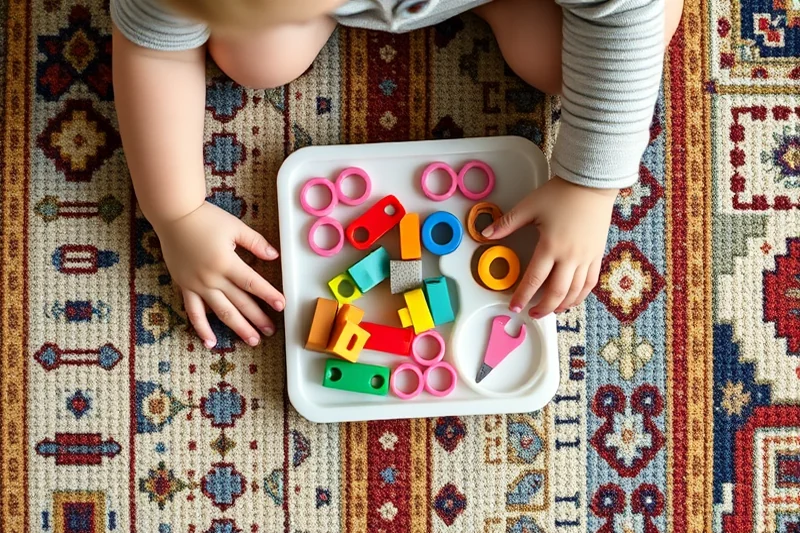
I used to think my son would never be interested in drawing. But the day he picked up a crayon and drew a scribble, I knew it was the beginning of something special. He wasn't making a perfect drawing, but the way his hand moved, the way he explored different colors—it was a breakthrough.
Drawing and writing are not just for artistic expression. They help to build the muscles in the hands and fingers. I've noticed that after regular drawing sessions, my son has improved in his ability to hold a pencil and make more controlled movements.
You don't need expensive art supplies. A few crayons, markers, and paper are enough. The most important thing is to encourage creativity and let your child explore their own style.
Related: Top fine motor skills ideas
The Fun of Puzzles and Building
I remember the first time my daughter tried to put together a simple jigsaw puzzle. She was frustrated at first, but after a few attempts, she managed to fit two pieces together. It was a small victory, but it meant a lot to her.
Puzzles and building blocks are excellent tools for developing fine motor skills. They require precision, patience, and problem-solving. I've seen my daughter's hand-eye coordination improve significantly after regular puzzle sessions.
You don't need expensive puzzles or building sets. Even simple wooden blocks or homemade puzzles can be just as effective. The key is to keep it fun and engaging for your child.
⭐ Classic
The basic recipe with just flour, salt, and water for a simple, safe, and fun sensory experience.
💰 Budget
Use ingredients you already have in your kitchen, like flour and water, to make a cost-effective play dough.
⚡ Extra-Fast
No kneading required—just mix the ingredients and let the dough rest for a few minutes before use.
✨ Depth
Add food coloring, beads, or scents to enhance the sensory experience and make it more engaging for your child.
🥗 Light
Use gluten-free flour and natural food coloring for a healthier and lighter version of play dough.
| The mistake | Why it happens | The fix |
|---|---|---|
| Using inappropriate tools for your child's age. | This can lead to frustration or even injury. Tools should be developmentally appropriate for your child's stage. | Choose tools that match your child's age and developmental level. Safety scissors and large beads are better for younger children. |
| Forcing your child to complete an activity. | This can make your child feel pressured and may discourage them from exploring fine motor skills in the future. | Let your child lead the activity. Encourage them, but never force them to do something they're not ready for. |
| Not providing enough variety in activities. | Children need different types of activities to develop a wide range面 of fine motor skills. | Mix up your activities regularly. Try a new activity each week to keep your child engaged and interested. |
| Not giving enough time for your child to practice. | Fine motor skills require repetition and practice. Not giving your child enough time can hinder their development. | Set aside dedicated time each day for fine motor activities. Even 10 minutes a day can make a big difference. |
What You'll Need tap to check off
- 1 lb all-purpose flour
- ½ cup salt
- water as needed
Method tap a step when done
- In a large bowl, mix together the flour and salt.
- Gradually add water, a little at a time, stirring until the mixture forms a dough.
- Knead the dough on a floured surface for about 5-10 minutes until it becomes smooth and elastic.
- Store the dough in an airtight container or wrap it in plastic wrap to keep it fresh.
- If you want a scented play dough, add a few drops of essential oil like lavender or peppermint.
- For added texture, mix in small amounts of cornstarch or oatmeal.
Key Facts
Related: Budget fine motor skills activities easy
Build Fine Motor Skills Without Tools
Related: Small fine motor activity
The Delight of Sorting and Classifying
Sorting and classifying activities help children develop hand-eye coordination and strengthen small muscle control in the hands and fingers.
I discovered the power of sorting activities during a rainy afternoon when I asked my five-year-old to organize a pile of buttons by color. Not only did he spend over 45 minutes engaged, but he also improved his ability to pinch and release small objects. Sorting buttons, beads, or even laundry by type or size is an excellent way to build fine motor skills without the need for any tools. These activities require precision, focus, and dexterity, making them ideal for kids who are just starting to develop their hand strength and control.
When I introduced a set of wooden blocks with varying shapes and sizes, my son began arranging them in different patterns, which not only kept him entertained but also helped him understand spatial relationships. Sorting and classifying can be done with everyday items like cereal, pasta, or even toys. The key is to provide a variety of materials that are safe for small hands and encourage the child to manipulate and organize them. This type of play promotes not only fine motor development but also cognitive skills like categorization and problem-solving.
I’ve also noticed that incorporating timers or setting simple challenges, like sorting a certain number of items within a time limit, increases engagement and makes the activity more fun. These types of activities are especially beneficial for children who are not yet ready for more complex tools or activities that require a higher level of coordination. The best part? They’re low-cost, easily customizable, and can be done anywhere — in the kitchen, at the dinner table, or even during a car ride.
Common Questions
How often should I do these activities with my child?
Can I do these activities with my toddler?
What if my child doesn't like these activities?
How long does it take to see results?
References
- PDF Open-Ended Art - Boston University (bu.edu)
- Building fine motor skills and why it matters - MSU Extension (canr.msu.edu)
- PDF Developing Fine Motor Skills (openlab.bmcc.cuny.edu)
- 18 Helpful Fine Motor Ideas and 4 Ways to Reinforce Quality ... (theartofeducation.edu)
- Improving Fine Motor Skills | USAHS (usa.edu)
Cite this guide
Grippylittle (2026). Build Fine Motor Skills Without Tools. https://grippylittle.com/build-fine-motor-skills-without-tools/
Feel free to cite or share this guide.