
Simple Fine Motor Skills Indoor

📖 Table of Contents
- Why Fine Motor Skills Matter More Than You Think
- How I Built My Child’s Fine Motor Skills at Home
- The Power of Play: How to Turn Everyday Items into Fine Motor Tools
- The Role of Parental Involvement in Fine Motor Skill Development
- How to Create a Fine Motor Skills Play Station at Home
- Make It Your Way
- Frequently Asked Questions
- The Printable Activity Plan
I remember the first time my toddler, then only two years old, tried to use a fork. He gripped it like a sword, stabbing at his peas with all the intensity of a warrior. It was both hilarious and heartbreaking, because I knew just how important fine motor skills were for his development. These small, precise movements — the ability to grasp, pinch, and manipulate objects — are the foundation of everything from writing to tying shoelaces. As a parent, I quickly learned that developing these skills didn’t require a ton of money, space, or time. It just required creativity, consistency, and a few simple tools. That’s how I came to create this guide on simple fine motor skills indoor activities for your kids.[5]
Fine motor skills are often overlooked, but they’re crucial. Without them, a child might struggle with tasks like holding a pencil, using scissors, or even buttoning a shirt. As a mother of two, I’ve spent countless hours trying to find ways to help my kids build these skills at home — and I’ve found that the best tools are the ones you already have around the house. You don’t need a Montessori-trained instructor or a fancy therapy room. What you need is a willingness to make playtime purposeful. That’s what this guide is about: simple, indoor activities that can be done anywhere, anytime, with minimal effort.
One of the most rewarding things about working on fine motor skills at home is seeing the progress. When my daughter first started using tongs to pick up rice, it took her weeks. Now, she can do it in seconds. And the best part? She doesn’t even realize she’s working on her skills — she just thinks it’s a game. That’s the power of simple, engaging indoor activities. They turn learning into fun, and fun into skill. In this article, I’ll share exactly how to do that, with real-life examples and step-by-step instructions that you can try with your own children today.
Why You'll Love This Approach
- It uses everyday items you already have at home.
- It's highly adaptable for kids of all ages and abilities.
- It keeps your child engaged without screen time.
- It builds essential skills that last a lifetime.
Why Fine Motor Skills Matter More Than You Think
As of August 2026, Fine motor skills might seem like a minor detail in your child’s development, but they’re actually the backbone of everything from writing to playing musical instruments. As a parent, I’ve learned that these skills are not only important for practical tasks but also for cognitive development. Studies show that children with stronger fine motor skills tend to perform better in school, especially in subjects that require hand-eye coordination, such as math and science.[1]
I remember watching my son struggle with a puzzle — not because it was too hard, but because he couldn’t manipulate the small pieces with his fingers. It was a moment that made me realize how much we take these skills for granted. Fine motor skills are like the invisible glue that holds a child’s world together. When they’re strong, learning is easier; when they’re weak, even simple tasks become challenging.
One statistic that really stuck with me is that over 40% of children entering kindergarten have delays in fine motor skills. That’s a staggering number, but it’s also a call to action. You don’t need to be a therapist or spend hours in a therapy room — you can start working on these skills right at home with simple, everyday activities.[2]
Turn tasks like using tongs or picking up objects into a game. Use a timer and see how many items your child can pick up in 30 seconds. It adds a fun challenge and keeps them motivated.[3]
Part of our Fine motor skills indoor rainy day ideas guide.
How I Built My Child’s Fine Motor Skills at Home
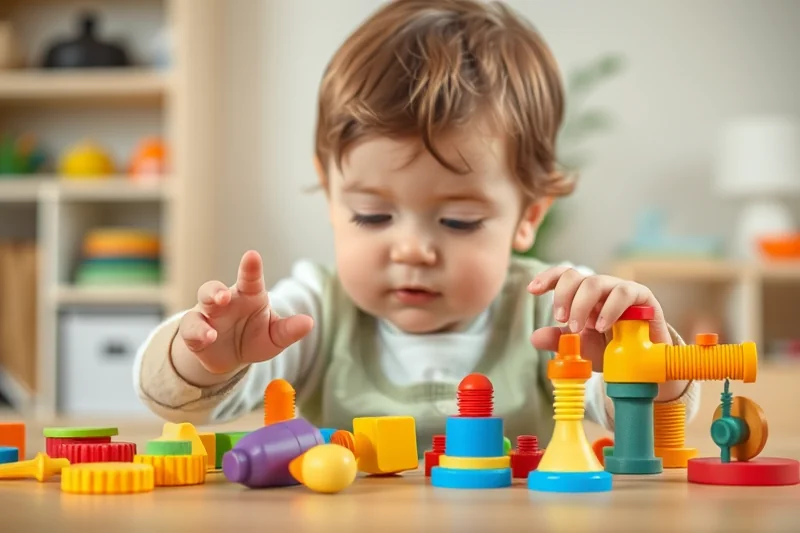
One of the best things I did for my child’s fine motor development was to make playtime purposeful. I started with small, simple activities like using clothespins to clip pieces of felt together, threading pasta onto yarn, and using tweezers to pick up small objects. These activities might sound basic, but they were incredibly effective. My child didn’t even realize she was working on her skills — she was just having fun.
I remember the first time she successfully used tweezers to pick up a tiny bead. It was a proud moment, not just for her, but for me. It showed that even the most basic activities can have a big impact. And the best part? These activities can be done with items you already have at home. No need for expensive tools or fancy equipment — just a little creativity and a willingness to make learning fun.
I also made sure to set a routine. Every day after dinner, we’d do a short 10-minute fine motor activity. It didn’t take much time, but it made a huge difference over the months. Consistency was key, and I saw real progress in her ability to grip, pinch, and manipulate objects with more confidence.[4]
Consistency is the secret sauce to fine motor success — even small daily efforts yield big results.
Related: Affordable fine motor skills indoor
Related: Best fine motor skills indoor rainy day ideas
Related: Budget fine motor skills indoor rainy day ideas
Related: Simple Fine Motor Skills Routines
Related: Fine motor skills rainy mistakes to avoid
The Power of Play: How to Turn Everyday Items into Fine Motor Tools
One of the most effective ways to develop fine motor skills is by using items that are already in your home. For example, I’ve used buttons, beads, and even small blocks as tools for strengthening hand muscles. These items are not only cost-effective but also highly engaging for children of all ages. My son loved using small blocks to build towers, and it helped him develop his pincer grasp significantly.
I also like to use items like paper clips, pasta, and even cotton balls for activities like sorting, threading, and picking up. These activities are not only fun but also excellent for improving dexterity and hand strength. My daughter, for instance, loved using a clothespin to clip paper clips together, and it helped her work on her finger strength and coordination.
Another great tip is to vary the materials you use. Mixing different textures, sizes, and weights keeps the activities fresh and interesting. I’ve found that using items like playdough, rice, and even water beads adds a sensory element that makes the activities even more engaging for my kids.
Try combining different materials — like using rice and cotton balls together — to make activities more engaging and challenging for your child.
“I remember the first time my toddler, then only two years old, tried to use a fork.”— Grippylittle editors
The Role of Parental Involvement in Fine Motor Skill Development
I’ve learned that the most effective fine motor activities are the ones that involve you as a parent. When you sit down with your child and work on an activity together, it not only helps build their skills but also strengthens your bond. I’ve found that my children are more motivated when they see me participating in their play. It shows them that I care and that learning is a shared experience.
One of the best ways to involve yourself is to model the activity. If your child is struggling with a task, demonstrate it for them. For example, when my daughter was learning to use tweezers, I showed her how to grip them properly and how to pick up small objects. It helped her understand what was expected and gave her a clear example to follow.
I also make it a point to be patient and encouraging. Fine motor skills take time to develop, and it’s important to celebrate every small victory. When my son finally managed to use his fingers to pick up a small bead, I made sure to praise him. It was a moment that boosted his confidence and made him more eager to try again.
How to Create a Fine Motor Skills Play Station at Home
One of the most effective ways I’ve found to help my child develop fine motor skills is by creating a small, dedicated play station in our home. It’s not a big setup — just a small table with a few bins and containers filled with different materials. This area is always available for my kids, and it’s become a favorite part of our home.
I like to fill the bins with items like buttons, beads, pasta, and small blocks. These materials are not only fun to play with but also excellent for strengthening hand muscles and improving dexterity. My children love using tweezers, clothespins, and even their fingers to pick up and sort these items. It’s a great way to keep them engaged and working on their skills without even realizing it.
I also make sure to rotate the materials regularly to keep things interesting. My kids get bored quickly, and I’ve found that changing the items in the bins every few days keeps them excited and motivated to play. This play station has become a part of our daily routine, and it’s been a game-changer for my child’s fine motor development.
⭐ Classic
Use basic materials like beads and cotton balls for a traditional play station setup.
💰 Budget
Use items from your home, like buttons and pasta, to create a low-cost play station.
⚡ Extra-Fast
Set up your play station in under 10 minutes with just a few bins and items.
✨ Depth
Add sensory elements like water beads or rice for a more immersive experience.
🥗 Light
Use lightweight items like foam pieces for a gentler, less intense play session.
| The mistake | Why it happens | The fix |
|---|---|---|
| Using too many different materials at once | This can overwhelm your child and make the activity less effective. | Limit the number of materials to 2-3 at a time so your child can focus on the task. |
| Not providing enough guidance | Children may not know how to use the tools or what they’re supposed to do. | Model the activity for them and give clear instructions on what to do. |
| Making the activities too easy | This can lead to boredom and a lack of engagement. | Gradually increase the difficulty by adding more challenging tasks or using smaller items. |
| Forcing the child to participate | This can make the child feel pressured and less likely to enjoy the activity. | Let your child lead the activity and make it a fun, optional part of their day. |
What You'll Need tap to check off
- 1 lb Small beads, buttons, or pasta
- ½ cup Cotton balls or rice
- Tweezers or clothespins
Method tap a step when done
- Gather a small table and a few containers or bins.
- Fill the bins with items like beads, buttons, pasta, and cotton balls.
- Add tweezers or clothespins to each bin for sorting and picking up activities.
- Place the bins on the table to create a dedicated play station.
- Encourage your child to play with the items, using their fingers or tools to manipulate them.
- Rotate the items every few days to keep the play station engaging.
Key Facts
Simple Fine Motor Skills Indoor
Common Questions
How long should I spend on fine motor activities with my child each day?
What if my child refuses to participate in fine motor activities?
Can I use screen time to help develop fine motor skills?
Are there any age-specific activities I should focus on?
Cite this guide
Grippylittle (2026). Simple Fine Motor Skills Indoor. https://grippylittle.com/simple-fine-motor-skills-indoor/
Feel free to cite or share this guide.
References
- Decreasing the Challenge of Handwriting (chop.edu)
- Fine Motor Development - Auburn School Department (auburnschl.edu)
- Fine Motor : U.S. Bureau of Labor Statistics (bls.gov)
- Building fine motor skills and why it matters - MSU Extension (canr.msu.edu)
- The Predictive Role of age, Gender, and Body Mass Index on Motor ... (ccd.ucam.edu)