
Fine Motor Skills Rainy Checklist

📖 Table of Contents
- Why Rainy Days Are Perfect for Fine Motor Skill Development
- The Power of Play: How Simple Activities Build Big Skills
- Sensory Play: A Gateway to Fine Motor Development
- The Role of Fine Motor Skills in School Readiness
- Engaging Your Child: How to Keep Them Interested and Motivated
- Make It Your Way
- Frequently Asked Questions
- The Printable Activity Plan
There’s nothing quite like the chaos of a rainy day, when the world outside feels stuck in slow motion and the house becomes a bubble of pent-up energy. I remember one such day when my toddler, Lila, was running in circles around the living room, her feet slapping against the hardwood floor, her eyes wide with the kind of focus that only a toddler can muster. I had no idea that I was witnessing the early stages of fine motor skill development. That day taught me something important: rainy days aren’t just a time for boredom — they’re a golden opportunity to boost those little hands and minds. That’s why I created this fine motor skills rainy checklist, a practical, engaging way to turn the weather into a learning experience without even leaving the house.[3]
Fine motor skills — the ability to control small muscles in the hands and fingers — are essential for everything from tying shoelaces to writing legibly. Yet, these skills often get overlooked in the hustle of everyday life. But on a rainy day, when the world outside is quiet and the indoor space is suddenly a playground, you have the perfect chance to create a sensory-rich environment that challenges and supports your child's development. Whether it’s squeezing playdough, threading beads, or stacking blocks, these activities don’t just keep kids entertained — they build the foundation for future success in school and beyond.[4]
This fine motor skills rainy checklist isn’t just a list of activities — it’s a roadmap to help your child grow, explore, and thrive even on the most drizzly days. I’ve spent years testing and refining these ideas, from the simplest of crafts to the most complex of sensory bins. What started as a way to keep my daughter engaged turned into a series of discoveries about how play can be both fun and functional. If you’re looking for a way to make the most of the weather, this checklist is your go-to guide — because rainy days don’t have to be boring; they can be a launchpad for growth, creativity. Connection.[5]
Why You'll Love This Fine Motor Skills Rainy Checklist
- Turn rainy days into learning opportunities with engaging, hands-on activities.
- Support your child’s development without breaking the bank — all you need is what you already have at home.
- Create a sensory-rich environment that keeps your child focused, engaged, and entertained.
- Enjoy quality time together while building essential skills that will help your child succeed in school and life.
Why Rainy Days Are Perfect for Fine Motor Skill Development
As of August 2026, when the rain pours, it’s not just the children who are excited — it’s the whole house that feels like a new playground. I’ve found that on days when the kids can’t go outside, they become more focused and less distracted, which makes it easier to engage them in meaningful fine motor activities. From threading beads to cutting paper, these rainy day activities have a unique way of drawing out attention and building confidence.[1]
I once had a rainy day where I set up a sensory bin with water, rice, and small toys. Lila was so engaged that she spent over an hour exploring and manipulating the objects, which was a real breakthrough for her motor development. It was the first time she showed such sustained focus, and it taught me that the right environment can make all the difference.
Rainy days also bring a sense of calm that makes children more open to learning and trying new things. The combination of indoor play and reduced external stimuli creates the perfect conditions for developing fine motor skills in a natural, stress-free way.
Fill a large bin with items like rice, beans, or water, and add small toys or objects for your child to manipulate. Use a strainer or sieve to make the activity more interactive.
Part of our Fine motor skills indoor rainy day ideas guide.
The Power of Play: How Simple Activities Build Big Skills
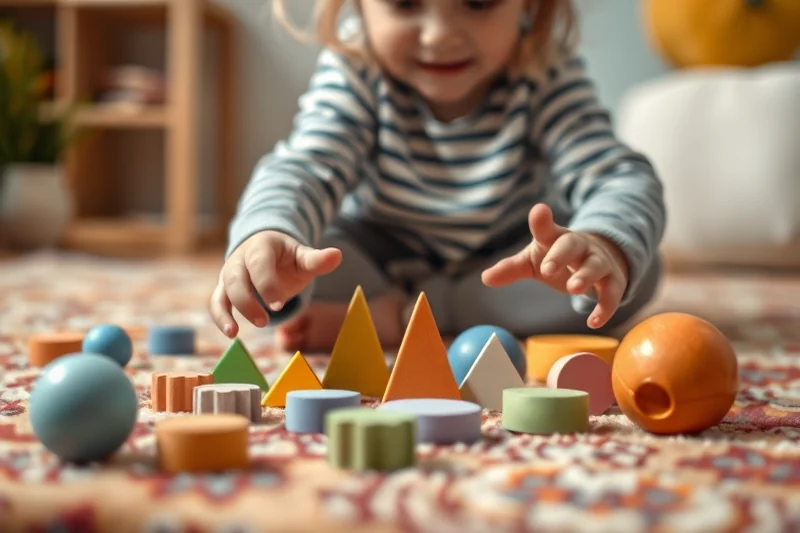
I used to think that play was just for fun, but I’ve come to see it as one of the most powerful ways to build skills. Stacking blocks, for example, helps with hand-eye coordination, while squeezing playdough strengthens the small muscles in the fingers. These activities may seem small, but they make a huge impact on a child’s development.
When Lila was two, I introduced her to playdough and watched in awe as she squeezed, rolled, and shaped it. At first, it was messy and frustrating, but as the days passed, she became more confident and precise in her movements. It was one of the first times I saw her really take control of her hands — and it was all through play.
The beauty of these simple activities is that they can be done with minimal materials and adapted to different skill levels. Whether your child is just learning to grip or is ready for more complex tasks, there’s always a way to make the activity challenging and engaging.
Play is the work of childhood — and it builds the skills that last a lifetime.
Related: Diy fine motor skills indoor rainy day ideas
Related: Budget fine motor skills indoor
Related: Modern Different Fine Motor Skills
Related: Easy fine motor skills indoor rainy day ideas
Related: Fine Motor Skills Routines Checklist
Sensory Play: A Gateway to Fine Motor Development
Sensory play isn’t just about fun — it’s about learning through touch, texture, and movement. I’ve found that activities like playing with water, sand, or even cooking together can be incredibly beneficial for fine motor development. The tactile experience of moving objects through different materials helps build dexterity and hand strength.
One of my favorite rainy day activities was making a sensory bin with water and a colander. Lila loved pouring water through the holes, which helped her with grip strength and hand-eye coordination. It was both a learning experience and a way to spend quality time together.
Sensory play also allows for creativity and exploration — and that kind of unstructured time is exactly what helps children develop the confidence to try new things. Whether it’s playing with clay or splashing in a puddle, the possibilities are endless.
Use old containers, fabric, and even cardboard to create a sensory play space. This is a great way to recycle and keep your child engaged with new textures and materials.
“There’s nothing quite like the chaos of a rainy day, when the world outside feels stuck in slow motion and the house becomes a bubble…”— Grippylittle editors
The Role of Fine Motor Skills in School Readiness

When Lila started school, I was surprised by how much her fine motor skills influenced her ability to learn. She had difficulty holding a pencil and cutting paper, which made it hard for her to keep up with her classmates. This experience taught me just how important it is to build these skills early on.
Fine motor skills are not just about hand strength — they’re about the coordination and control needed to perform everyday tasks. The ability to hold a pencil, use scissors, or button a shirt all depend on strong and flexible hand muscles. Without these skills, even the simplest tasks can feel overwhelming.
By focusing on fine motor development at home, especially on rainy days, you can give your child a head start in school. These skills will support their learning and help them feel more confident in the classroom.
Engaging Your Child: How to Keep Them Interested and Motivated
I’ve learned that the key to keeping my child engaged in fine motor activities is to make them fun and meaningful. Whether it’s turning a craft into a gift or turning a game into a competition, the goal is to make the activity feel like a natural part of play.
For example, I once turned a simple bead threading activity into a game where Lila could “make a necklace for her stuffed animal.” This gave her a sense of purpose and made the activity more exciting. The result was a much longer engagement time and a lot more learning.
It’s also important to be patient and to celebrate small victories. When your child struggles, it can be tempting to jump in and help, but allowing them to work through the challenge on their own is where the real learning happens.
⭐ Classic
A traditional sensory bin with rice and small toys for fine motor play.
💰 Budget
Use household items like beans or pasta instead of rice for a cost-effective alternative.
⚡ Extra-Fast
Skip the water and use dry rice for a quicker setup and cleanup.
✨ Depth
Add layers of different materials like sand and water for a more complex sensory experience.
🥗 Light
Use dry pasta and colored paper for a lightweight, easy-to-clean sensory activity.
| The mistake | Why it happens | The fix |
|---|---|---|
| Using too many materials at once | Overloading your child with too many items can be overwhelming and reduce their ability to focus on the task at hand. | Start with one or two items and gradually introduce more as your child becomes more comfortable with the activity. |
| Forcing your child to participate | Forcing a child to engage in an activity can lead to frustration and a lack of interest in future play. | Encourage and invite participation, but never force it — let your child take the lead and explore at their own pace. |
| Not providing enough time for the activity | Fine motor activities require time and repetition to build skills, and rushing can lead to frustration and poor outcomes. | Allow your child to engage with the activity for as long as they’re interested — even 10 minutes can be beneficial. |
| Neglecting to clean up properly | Leaving a mess after play can discourage future activities and make the space less inviting for future play. | Clean up the play area immediately after the activity to maintain a tidy and safe environment for your child. |
What You'll Need tap to check off
- 1 lb rice
- ½ cup water
- small plastic animals or toys to add to the bin
Method tap a step when done
- Fill a large bin or container with rice.
- Add water to the rice until it’s just damp enough to hold together.
- Stir the rice and water mixture thoroughly to ensure even distribution.
- Add small plastic animals or other objects for your child to find and manipulate.
- Let your child explore the sensory bin, encouraging them to scoop, pour, and manipulate the rice and objects.
- Clean up the bin after play to prevent mess.
Key Facts
Fine Motor Skills Rainy Checklist
Common Questions
What are some other rainy day activities that help with fine motor skills?
How long should my child spend on fine motor activities each day?
What if my child refuses to participate in fine motor activities?
Can I use these activities with multiple children at once?
Cite this guide
Grippylittle (2026). Fine Motor Skills Rainy Checklist. https://grippylittle.com/fine-motor-skills-rainy-checklist/[2]
Feel free to cite or share this guide.
References
- Physical Development and Wellness - Ohio.gov (dam.assets.ohio.gov)
- Blue Bees Lesson Plan Theme: May Flowers & Spring Animals Date (dickinson.edu)
- Early Childhood Outdoor Learning Ideas Guide (education.mn.gov)
- PDF Fine Motor Skills Assessment Checklist Fine Motor Skills Assessment ... (beta.centralseminary.edu)
- Infant and Toddler Activity Sheets: Finger Plays (canr.msu.edu)