
Budget Fine Motor Skill Activities

📖 Table of Contents
I remember the first time I realized my toddler was struggling with the simplest tasks — grasping a spoon, threading a needle, or even holding a crayon steady. It wasn’t just about development; it was about the frustration we both felt watching him fumble through everyday activities. As a parent, I knew there had to be a way to help him build those fine motor skills without breaking the bank. That’s how I started exploring budget fine motor skill activities that didn’t require expensive therapy sessions or fancy toys. What I found was surprising — simple, everyday items could make a world of difference.[5]
It’s easy to feel like fine motor development is something that requires expensive equipment or professional intervention. But the truth is, some of the most effective exercises come from the things we already have at home. Whether it’s a roll of duct tape, a bag of rice, or even a cardboard box, these materials can be transformed into engaging tools for learning. When I first began experimenting with budget fine motor skill activities, I was amazed at how much my child could improve with just a few minutes of focused play each day.
What I quickly learned was that the key to effective budget fine motor skill activities was consistency and intention. I didn’t need to spend hours each day — just 15 to 20 minutes, a few times a week, could make a noticeable difference. And the best part? Many of these activities can be done while I was cooking, cleaning, or even watching TV. It was a win-win for us both. I didn’t just help my child develop essential skills; I also found a way to make learning fun and accessible for our family.[1]
Why You'll Love This Approach to Fine Motor Skill Development
- You don’t need to spend a fortune — just use items you already own.
- These activities can be done in short bursts, even while doing other tasks.
- They’re safe, creative, and adaptable to any child’s abilities.
- They help build foundational skills that support future learning and independence.
Getting Started with Budget Fine Motor Activities
As of August 2026, I began by setting up a few simple activities around the house — like a sensory bin filled with rice and small plastic animals. It was amazing to see how my child was naturally drawn to the texture and sound of the rice as he scooped it up with his hands. This simple activity not only helped develop his hand strength but also improved his coordination and focus.
Another activity I tried was using a roll of duct tape on the floor. I would lay it out in straight lines and then have my toddler walk across it, stepping on the tape with each foot. This helped improve his balance and foot coordination, which are important for writing and drawing later on. It was a fun and surprisingly effective way to engage him.
I found that using everyday objects like cotton balls, straws, and playdough turned into some of the most engaging activities. For example, I filled a bowl with cotton balls and asked my child to scoop them up with a spoon. It was both a fine motor challenge and a sensory experience that kept him focused for longer than I expected.
When I first started, I worried about not having the right materials. But I quickly realized that things like paper clips, cotton balls, and even cereal could be turned into effective tools. Just a few minutes of preparation can make a big difference.
Part of our Fine motor skills guide.
The Power of Tactile Play
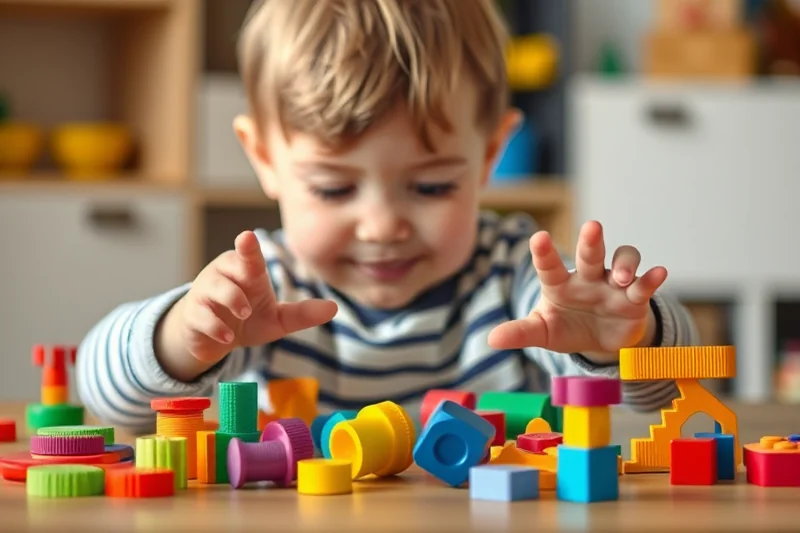
I discovered that tactile play — activities involving touch and movement — was one of the most engaging and effective ways to develop fine motor skills. I filled a container with different textures like rice, beans, and sand and let my child explore them with his hands. This not only helped with hand strength but also improved his sensory processing and attention to detail.
I also created a 'texture wall' by taping different materials like felt, sponge, and sandpaper to a piece of cardboard. My child would trace his fingers over the wall, and it was fascinating to watch him learn to differentiate between textures. This kind of activity helped him understand how to use his hands with more precision and control.
One of the most surprising things was how much my child improved his grip strength just by using items like playdough, which he could roll, press, and stretch. It became a regular part of our routine and something he looked forward to every day.
Tactile play is like a secret superpower for fine motor skills — it's effective, engaging, and surprisingly simple.
Related: Simple fine motor skills ideas
Related: Different fine motor skills
Related: Top fine motor skills for beginners
Related: Crafts for fine motor skills printable
Related: Fine motor skills tips without tools
Related: Fine Motor Skill Development Toys
Fine Motor Activities That Double as Learning Tools
One of my favorite activities was using a set of small containers and having my child sort different colored beads into them. This helped him practice color recognition, counting, and sorting, all while working on his fine motor skills. It was a win-win for learning and development.
I also used a set of magnetic tiles — not the expensive ones, but the ones I found on sale — and let my child build shapes and structures. This not only improved his hand-eye coordination but also helped him understand spatial relationships and geometry concepts in a fun way.
Another activity that doubled as a learning tool was using a whiteboard and markers to practice writing letters. I would draw a letter on the board and have my child copy it, which helped with both fine motor skills and early literacy. It was something I could do quickly and it had a lasting impact on his learning.
One of the best things about budget fine motor skill activities is that they can be combined with learning. I made a point to incorporate basic math and literacy lessons into every activity, and it made a huge difference in my child’s development.
“I remember the first time I realized my toddler was struggling with the simplest tasks — grasping a spoon, threading a needle, or even holding…”— Grippylittle editors
How Consistency Builds Stronger Skills
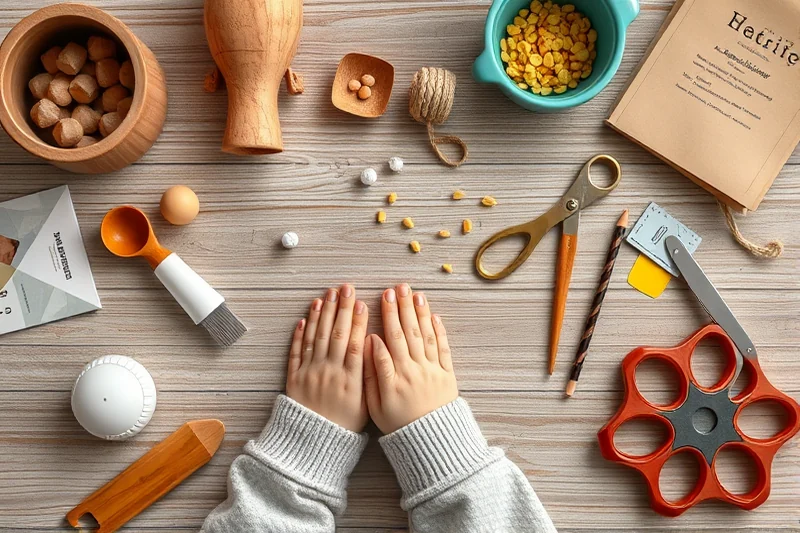
I quickly realized that even short, regular sessions were more effective than long, infrequent ones. I would set aside 10 to 15 minutes a few times a week, and over time, I saw a noticeable improvement in my child’s coordination and focus. It was more manageable for us and made the activities feel less like a chore.[2]
I started a routine where we did fine motor activities right after breakfast, and it became a part of our daily rhythm. My child didn’t even mind it because he associated it with the start of the day. It was a small change, but it made a big difference in his engagement and progress.
I also noticed that when we combined fine motor activities with other tasks, like cleaning up or cooking, it helped my child stay focused for longer. It wasn’t just about the activity itself — it was about making it a natural part of our day.
Making It Fun and Engaging
I found that making the activities a game or a challenge helped my child stay motivated and interested. For example, I would set up a 'race' where he had to pick up as many cotton balls as possible in 30 seconds using only his hands. It was a fun and competitive way to practice his grip strength and coordination.[3]
I also used music and songs to make the activities more engaging. When we were working on fine motor tasks, I would play a favorite song and have my child do the activity while it played. It made the time feel more like play and less like work, which kept him more focused.
I also involved my child in the planning and setup of the activities. He loved choosing which texture to play with or which game we would do. This not only made the activities more fun but also gave him a sense of ownership and control over the learning process.
⭐ Classic
The basic sensory rice activity with rice and beans only.
💰 Budget
Use free or low-cost materials like rice from a local store or donated containers.
⚡ Extra-Fast
Use pre-filled sensory bins for immediate play without preparation.
✨ Depth
Add more layers by mixing in other textures like pasta, cotton balls, or small toy pieces.
🥗 Light
Use uncooked rice only for a lighter, less messy option.
| The mistake | Why it happens | The fix |
|---|---|---|
| Using small items that could be a choking hazard | Small objects like beads or small toys can be dangerous for young children who are still learning to handle objects safely. | Always use items that are large enough for your child’s age, and never leave them unsupervised during play. |
| Not cleaning up after play sessions | Leaving materials scattered can lead to messes and make it harder to find items for future activities. | Set up a designated area for cleanup and make it a part of the routine after each session. |
| Overcomplicating the activities | Sometimes adding too many elements can overwhelm the child and reduce the effectiveness of the activity. | Start with simple tasks and gradually introduce more complex ones as your child becomes more comfortable. |
| Not varying the activities | Doing the same activity repeatedly can lead to boredom and a lack of progress in skill development. | Rotate the activities regularly to keep the child engaged and challenge them in new ways. |
What You'll Need tap to check off
- 1 lb uncooked rice
- ½ cup dry beans
- food coloring (optional)
Method tap a step when done
- In a large mixing bowl, add the uncooked rice and dry beans.
- If using food coloring, add a few drops and mix well to ensure even color distribution.
- Pour the mixture into a large container or plastic bag for storage.
- When ready to use, add the sensory bin or activity container of choice and let your child explore.
- After use, simply pour the rice and beans back into the container and store for the next session.
- For easy cleanup, use a plastic liner inside the bin to prevent staining.
Key Facts
Budget Fine Motor Skill Activities
Common Questions
Can these activities be done with very young children?
How often should I do these activities?
Do I need to buy special materials for these activities?
Can I do these activities with multiple children?
References
- Fine Motor : U.S. Bureau of Labor Statistics (bls.gov)
- PDF Fine Motor Occupational Therapy Activities (cao.jacksonms.gov)
- PDF Materials Guide: ITERS-3 and ECERS-3 - Bright from the Start (decal.ga.gov)
- ERIC - EJ1322481 - Effects of Occupational Therapy-Led Fine Motor ... (eric.ed.gov)
- PDF Today's Topics: Fine Motor Skills - City of Fort Worth (fortworthtexas.gov)
Cite this guide
Grippylittle (2026). Budget Fine Motor Skill Activities. https://grippylittle.com/budget-fine-motor-skill-activities/
Feel free to cite or share this guide.