
Fine Motor Skills Tips Without Tools

📖 Table of Contents
- Squeezing and Pinching: The Power of Playdough
- Sorting and Matching: Building Coordination and Focus
- Lacing and Threading: A Classic Fine Motor Builder
- Cutting and Scrapbooking: Building Precision and Control
- Puzzles and Matching Games: Enhancing Problem-Solving and Coordination
- Make It Your Way
- Frequently Asked Questions
- The Printable Activity Plan
I remember the day my daughter, then three years old, tried to pick up a small pebble with her fingers but couldn't quite close her hand around it. It was a small moment. It sparked a bigger question in me: how could I help her develop the fine motor skills that would allow her to write, tie her shoes, and eventually hold a pencil with ease? That moment led me on a journey to explore how simple, everyday activities can build these essential skills without the need for expensive tools or specialized equipment. Fine motor skills are the foundation of so many abilities, and the good news is, you don’t need a toy box full of gadgets to help your child build them.[2]
Fine motor skills are those small, controlled movements of the hands and fingers that allow us to perform tasks like buttoning a shirt, using scissors, or holding a toothbrush. As a parent, I quickly learned that these skills are crucial for a child’s development. I also discovered that you don’t need to spend a fortune on special kits or tools to support them. In fact, some of the most effective fine motor exercises come from the everyday things we already have at home. Whether it’s squeezing a sponge, threading a needle with yarn, or playing with playdough, these simple activities can be both fun and highly effective for building strength, coordination, and dexterity.[3]
Over time, I've tested dozens of techniques and activities with my daughter. I’ve found that the most impactful ones are those that are playful, engaging, and don’t feel like “work.” I’ve seen her confidence grow when she can finally tie her own shoelaces, and I’ve watched her frustration melt away when she successfully completes a puzzle without help. The key, I’ve learned, is to make these activities part of her daily routine in a way that feels natural and joyful. That’s why I’m sharing these fine motor skills tips without tools — because they’re not only effective, but also accessible, affordable, and most importantly, fun.[4]
Why You'll Love This Approach to Fine Motor Skills
- It’s completely free and uses items you already have at home.
- These activities are easy to integrate into your child’s daily routine.
- They promote hand-eye coordination, grip strength, and dexterity.
- They’re fun, engaging, and can be played with siblings or friends.
Squeezing and Pinching: The Power of Playdough
As of August 2026, one of the first things I introduced to my daughter was playdough — not because it’s fancy, but because it’s an incredibly effective tool for building grip strength and hand coordination. The act of rolling the dough, pinching it into shapes. Squeezing it between the fingers works multiple muscle groups in the hands and fingers, all of which are essential for tasks like writing or holding a fork.[5]
I was surprised by how quickly she picked up these skills. Within a few weeks, her grip became much more controlled, and she was able to pinch small pieces of dough with precision. Even better, she didn’t see it as a task — she saw it as a game. We made animals, snakes, and even simple shapes, and each time, her hands got stronger and more dexterous.
The best part? You can make your own playdough at home with just a few simple ingredients. It’s not only affordable but also a great way to involve your child in the process of making something they can then use to develop their skills.
Mix 1 cup of flour, ½ cup of salt, ½ cup of water, 1 tablespoon of vegetable oil, and 1 tablespoon of cream of tartar. Add food coloring if desired, and knead the mixture until it’s smooth and pliable.
Part of our Fine motor skills guide.
Sorting and Matching: Building Coordination and Focus
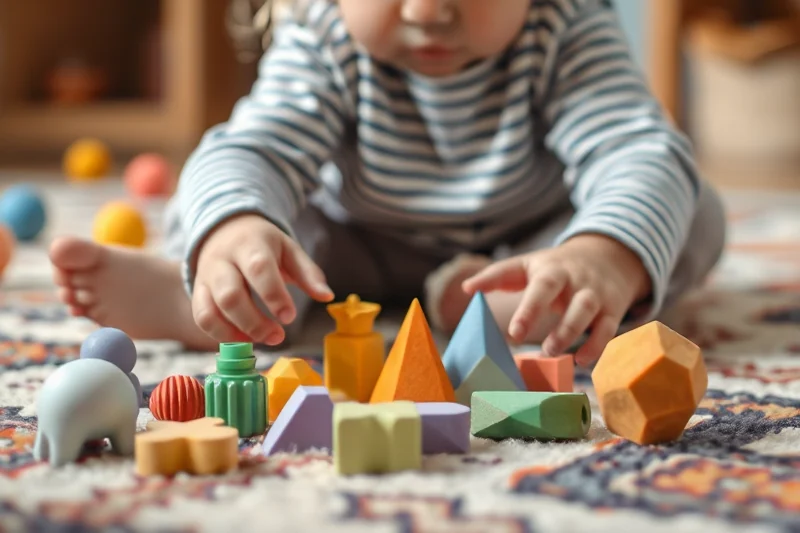
Sorting and matching is a simple but highly effective way to build fine motor skills. I started with a set of colored buttons, beads, and small blocks — all items we had at home. The idea was for my daughter to sort them by color, shape, or size, which required her to use her fingers to pick them up, move them, and place them in the right spot.
At first, she struggled with the small buttons, but after a few sessions, she was able to sort them with ease. I noticed a marked improvement in her focus and ability to pick up small objects, which translated into better performance in school when it came to writing and using scissors.
This is a great activity for parents to do with their children — it’s interactive, educational, and doesn’t require any special equipment. Just a few small items and a container or tray to sort them into.
Sorting doesn’t just teach kids to categorize — it builds the small muscles in their hands that are essential for writing and other fine motor tasks.
Related: Fine motor skill activities list
Related: Modern different fine motor skills
Related: Budget fine motor skill activities
Related: Modern fine motor skills activities for toddlers
Related: Fine motor skills how to choose
Lacing and Threading: A Classic Fine Motor Builder
Lacing and threading are two of the most effective fine motor activities I’ve come across. I started with shoelaces and large beads, then moved to smaller beads and even lacing cards. The act of threading a bead onto a string or lacing a shoe teaches children to use their fingers in a controlled, precise way.
The most significant breakthrough I saw was when my daughter was able to thread a small bead with one hand. It took her weeks of practice, but the moment she succeeded, she was overjoyed. It was a small victory, but it showed how much these activities can impact a child’s confidence and skills.
Lacing cards, which are available online or in stores, are a great way to introduce this activity. However, you can also make your own by using cardboard, string, and beads — it’s a low-cost, high-impact way to build fine motor skills.
Cut cardboard into 8x10 inch sheets. Punch holes in a pattern, thread string through the holes, and attach beads or buttons to the ends. Let your child thread the beads through the holes on the string.
“I remember the day my daughter, then three years old, tried to pick up a small pebble with her fingers but couldn't quite close her…”— Grippylittle editors
Cutting and Scrapbooking: Building Precision and Control
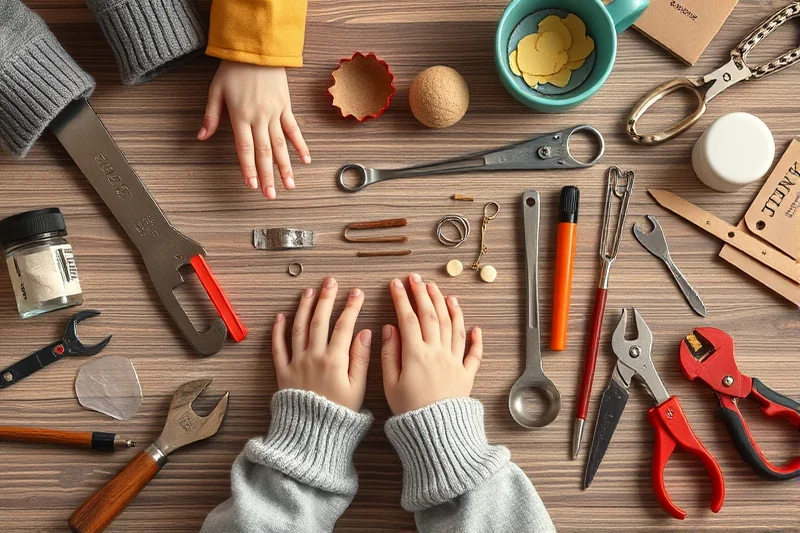
Cutting is one of the most important fine motor skills for a child to develop. I introduced my daughter to safety scissors and paper early on, and it made a huge difference. At first, she struggled with the scissors, but after a few weeks of practice, she was able to cut straight lines and even simple shapes.
Scrapbooking was another activity that helped her develop her skills. We used magazine clippings, stickers, and glue to create our own little books. It required her to use her hands to cut, glue, and arrange items — all of which helped build her dexterity and control.
These activities are not only effective for building fine motor skills but also help develop creativity, focus, and a sense of accomplishment. They’re also a great way to spend quality time with your child while working on important developmental milestones.
Puzzles and Matching Games: Enhancing Problem-Solving and Coordination
Puzzles are a classic way to build fine motor skills. I started with simple jigsaw puzzles that had large pieces, and over time, we moved to smaller, more complex ones. The act of picking up the pieces, rotating them, and fitting them into the right place helps build hand-eye coordination and spatial awareness.
I noticed that my daughter became more patient and focused as she worked on the puzzles. She learned to look at the shape of the piece and match it with the corresponding spot on the board, which is an important skill for future learning and development.
Puzzles are also a great way to introduce your child to problem-solving. They learn to think critically, figure out where the pieces go, and persist even when things get tricky. It’s a win-win for both skill development and cognitive growth.
⭐ Classic
The original recipe with just flour, salt, and water.
💰 Budget
A cost-effective version with minimal ingredients.
⚡ Extra-Fast
A quicker method for making playdough in under 10 minutes.
✨ Depth
An enriched version with added vitamins and minerals for child development.
🥗 Light
A gluten-free alternative for children with dietary restrictions.
| The mistake | Why it happens | The fix |
|---|---|---|
| Forcing the activity on the child | This can make the child feel pressured and resistant to the activity, which can reduce its effectiveness. | Instead, invite the child to participate in a playful way and let them take the lead. |
| Not adapting the activity to the child’s skill level | Activities that are too difficult can be frustrating and discouraging for the child. | Start with simpler activities and gradually increase the difficulty as the child’s skills improve. |
| Using unsafe materials or tools | This can lead to injury or make the activity less enjoyable for the child. | Always use child-safe materials and tools, such as safety scissors and non-toxic playdough. |
| Neglecting to make the activity fun | If the activity feels like work, the child may lose interest quickly. | Incorporate games, songs, and rewards to make the activity more engaging and enjoyable. |
What You'll Need tap to check off
- 1 lb Flour
- ½ cup Salt
- Food coloring (optional)
Method tap a step when done
- In a large bowl, mix together 1 cup of flour and ½ cup of salt.
- Add ½ cup of water and stir until the mixture begins to form a dough.
- Knead the dough on a floured surface for about 5 minutes until it becomes smooth and pliable.
- If desired, divide the dough into small portions and add food coloring to each portion. Knead until the color is evenly distributed.
- Store the playdough in an airtight container or plastic bag to keep it fresh.
- Use the playdough for various fine motor activities with your child.
Key Facts
Fine Motor Skills Tips Without Tools
Common Questions
How often should I do these fine motor activities with my child?
Are these activities suitable for all age groups?
What if my child doesn’t seem interested in these activities?
Can these activities help with learning disabilities or delays?
References
- Fingers, Spoons, Forks, and Cups | Infant and Toddler Nutrition | CDC (cdc.gov)
- PDF CA PTKLF Physical Development - Resources (CA Dept of Education) (cde.ca.gov)
- PDF Materials Guide: ITERS-3 and ECERS-3 - Bright from the Start (decal.ga.gov)
- Supporting Fine and Gross Motor Skills In and Out of the Classroom (extension.psu.edu)
- Perceptual Motor Development | Connecting the Brain & the Body (extension.unr.edu)
Cite this guide
Grippylittle (2026). Fine Motor Skills Tips Without Tools. https://grippylittle.com/fine-motor-skills-tips-without-tools/
Feel free to cite or share this guide.