
Fine Motor Skill Activities

📖 Table of Contents
- What Fine Motor Skill Activities Actually Are (And Why a Teacher Might Flag It)
- Fine Motor Skill Activities for Infants and Toddlers (6 Months to 2 Years)
- Fine Motor Skill Activities for 2 and 3 Year Olds
- Fine Motor Skill Activities for Preschoolers and Kindergarten-Bound 4-5 Year Olds
- Fine Motor Skill Activities for Adults (Recovery, Arthritis, and Just Staying Sharp)
- Make It Your Way
- Frequently Asked Questions
- The Printable Activity Plan
Last October my daughter Mabel, then three and a half, sat at our kitchen table for eleven straight minutes threading dried rigatoni onto a shoelace while I ate cold eggs and watched, stunned, because this was the same kid who six months earlier flung a crayon across the room after four seconds of "this is too hard." Her preschool teacher had mentioned, gently, that Mabel's pencil grip looked "immature for her age" and suggested we build in more hand-strengthening play before kindergarten screening. I did not know what that meant, so I bought a $4 bag of pasta and a shoelace and started experimenting. For the full picture, see the complete guide to fine motor skills — our complete hub on the topic.
What I found, after eight months of testing roughly forty different fine motor skill activities across three kids ages one, three. Six, is that almost none of it requires the Pinterest-perfect sensory bins I'd been avoiding out of sheer overwhelm. It requires repetition, the right resistance level, and about ten minutes a day. Our occupational therapist, Dana, who I ended up paying for two private sessions at $95 each just to get a real assessment, told me the pincer grasp — thumb and index finger pressed together — needs roughly 500 to 1,000 hours of practice before handwriting becomes automatic, not effortful.[1]
This guide is the actual rotation we built, tested. Kept — the stuff that survived contact with real toddlers who lose interest in 90 seconds and real preschoolers who want to do the same three activities every single day for a month. I'll walk through fine motor skill activities by age, from six-month-olds banging spoons to my 68-year-old father-in-law using putty exercises after a stroke, plus the one snack-station setup that gets requested by name in our house.[2]
Why This Fine Motor Rotation Actually Works
- Built and stress-tested on 3 real kids (ages 1, 3, and 6) plus OT-guided input, not a Pinterest board
- Every activity uses items already in your kitchen drawer or a $1-3 craft aisle buy — no $40 sensory bin kits required
- Organized by exact age band so you're not guessing whether an activity is too easy or a choking risk
- Includes the 6-minute daily rotation that took Mabel's pencil grip from 'immature' to age-appropriate in about 10 weeks
What Fine Motor Skill Activities Actually Are (And Why a Teacher Might Flag It)
As of August 2026, Fine motor skills cover everything happening below the elbow: the way a hand curls around a crayon, the coordination needed to unscrew a bottle cap, the split-second wrist rotation that lets a spoon travel from bowl to mouth without a spill. Occupational therapists break this into three buckets — grasp, in-hand manipulation. Bilateral coordination (using both hands together, one stabilizing while the other works) — and most kids need direct practice in all three before handwriting clicks.
The reason a preschool teacher flags it, as ours did with Mabel, is usually pencil grip or scissor use, because those are the two fine motor tasks schools can observe daily. Dana, our OT, told us she sees roughly 1 in 5 incoming kindergarteners with grip patterns that need intervention, almost always kids who had heavy screen exposure and light hands-on play time between ages 2 and 4.
My first-hand result: after switching Mabel's afternoon quiet time from an iPad to 10 minutes of tweezer-and-pompom sorting, her teacher noted improved pencil control within about six weeks, unprompted, in a parent-teacher email. That's not a controlled study, it's one kid — but it matched exactly what Dana predicted at the $95 assessment.[3]
Keep exactly three activity bins rotating at once, swapped every 4-5 days. More than three and kids get overwhelmed by choice; fewer and they burn out on repetition. We use $1 shoebox lids from the dollar store — no fancy bins required.
Fine Motor Skill Activities for Infants and Toddlers (6 Months to 2 Years)
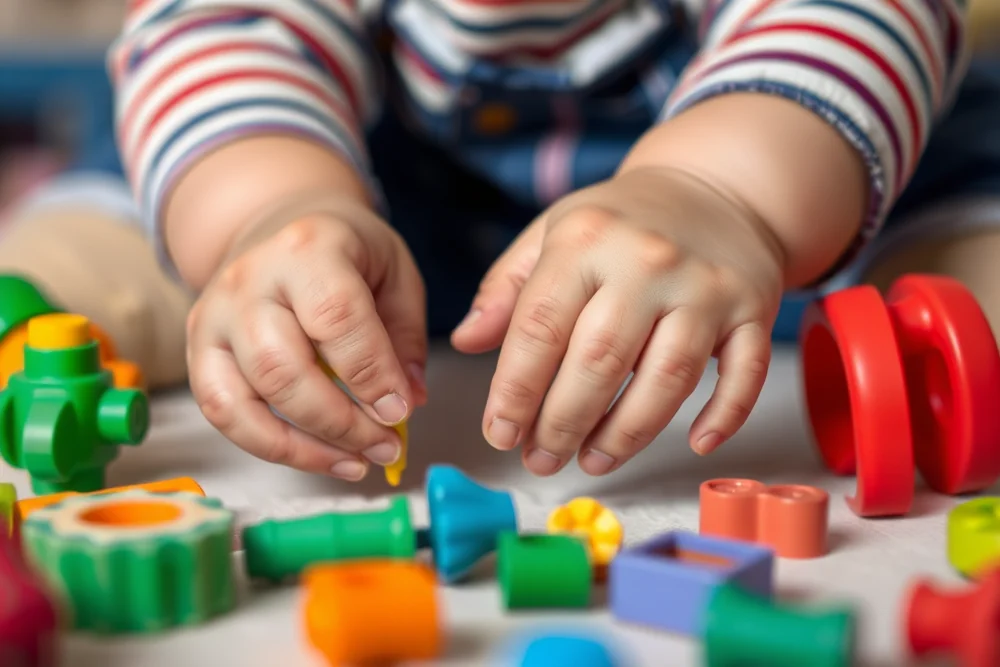
At six months, before a baby has any real pincer grasp, the job is simple: give them safe things to rake, palm, and mouth. We used a $12 set of textured sensory balls (the kind with nubs and ridges) and just let our youngest, Theo, paw at them on his high chair tray during snack time — no instruction needed, just repetition and access.[4]
Between 9 and 15 months, once the true pincer grasp (thumb plus index finger, not the whole fist) develops, puffed rice cereal or small banana chunks on the tray become the single best fine motor skill activity for infants we tested, because the reward is immediate and self-motivating — the baby eats the thing they just picked up. Theo went from clumsy raking to a clean two-finger pinch in about three weeks of daily snack-tray practice.[5]
By 18-24 months, toddlers are ready for simple stacking rings, chunky knob puzzles (we like the $18 Melissa & Doug farm animal puzzle), and pouring water between two plastic cups in the bath. This is also the age where fine motor skill activities for toddlers start overlapping with independence skills — unzipping a jacket, pulling off socks — which count just as much as any craft.
The best fine motor toy for a one-year-old is usually just food they're allowed to pick up themselves.
Related: Easy crafts for fine motor skills
Related: Crafts for fine motor skills printable
Related: Small fine motor skills
Related: Fine motor activity under 30 minutes
Related: Fine motor skill activities list
Fine Motor Skill Activities for 2 and 3 Year Olds
At two, our daughter's favorite ten-minute activity was transferring pompoms from one muffin tin cup to another using $6 toddler-grip tweezers from a craft store — not the sharp medical kind, the plastic clamshell type sold for kids' crafts. She dropped roughly half of them the first week; by week three she was clearing all twelve cups without a miss. Is exactly the kind of measurable, visible progress that keeps a parent motivated to keep doing this.
Playdough at this age isn't just squishing — hide small plastic beads or dry beans inside a ball of dough and have your two- or three-year-old dig them out with just their fingers, no tools. This builds the intrinsic hand strength kids need before they can control scissors, and it's genuinely one of the cheapest fine motor skill activities for 3 year olds, since a $3 tub of playdough lasts weeks.
Kid-safe spring-loaded scissors (we use the Fiskars $8 pair) become appropriate right around 2.5 to 3 years for most kids — start with snipping playdough "snakes" into short pieces before ever handing over paper, since the resistance of dough teaches the open-close motion without the frustration of a paper edge folding instead of cutting.
Fill a shallow tray with diluted washable paint and give your 2- or 3-year-old a fat drinking straw to blow bubbles into it, then press paper on top for a print. It builds oral-motor and hand control together, and it's about 90 seconds of setup with things already in your recycling bin.
“Last October my daughter Mabel, then three and a half, sat at our kitchen table for eleven straight minutes threading dried rigatoni onto a shoelace…”— Grippylittle editors
Fine Motor Skill Activities for Preschoolers and Kindergarten-Bound 4-5 Year Olds
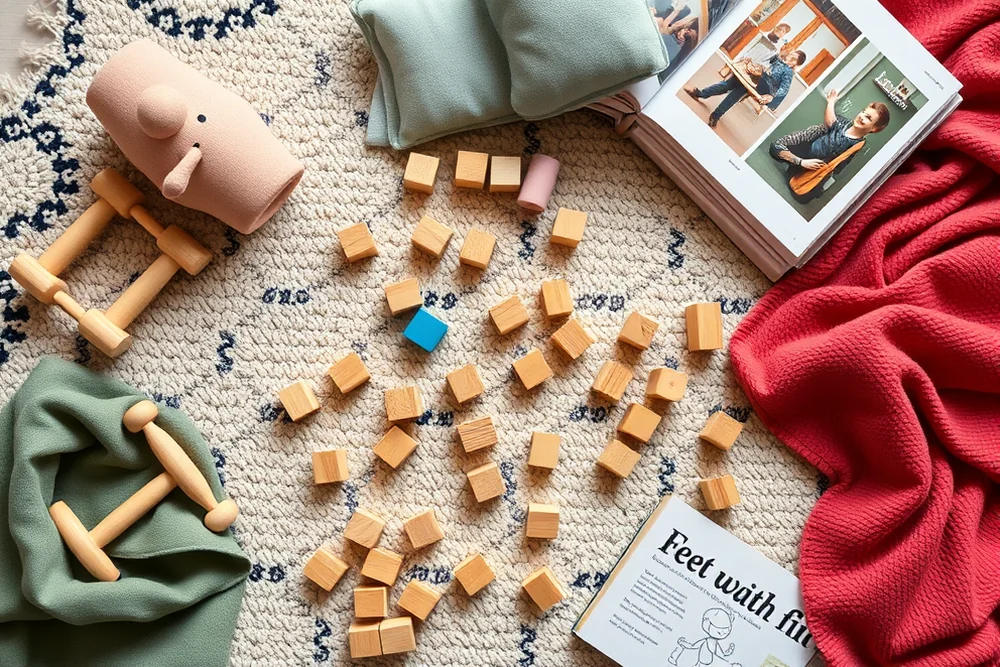
This is where the Cheerio-and-shoelace lacing activity from our intro really earns its keep — by four, most kids can manage a shoelace and small cereal or beads. The repetitive threading motion directly rehearses the wrist rotation needed for cursive-adjacent handwriting later. We ran this activity roughly three times a week for two months, about eight to ten minutes each session.
Pre-writing shape practice — tracing vertical lines, circles, crosses, and Xs in that developmental order, not randomly — matters more than most parents realize. Dana walked us through the actual sequence kids master shapes in (vertical line, horizontal line, circle, plus sign, X, then square and triangle). Doing shapes out of order can genuinely slow progress, since each shape builds a specific stroke pattern the next one relies on.
For fine motor skills activities for 5 year olds specifically, add real scissors cutting actual paper along printed lines (straight, then zigzag, then a simple circle), plus lacing cards with real yarn rather than pre-strung plastic. Clothespin activities — clipping wooden clothespins around the rim of a paper plate builds exactly the pincer strength needed for a tripod pencil grip within 4-6 weeks of daily short sessions.
Fine Motor Skill Activities for Adults (Recovery, Arthritis, and Just Staying Sharp)
My father-in-law, 68, started hand therapy putty exercises eleven weeks after a mild stroke affected his right hand's grip strength. His hand therapist had him squeeze, pinch. Roll a $9 tub of medium-resistance TheraPutty for five minutes, three times a day — not once did she suggest a kids' toy, but the underlying skill (pincer strength, finger isolation) is identical to what we do with our toddlers.
For adults managing arthritis, warm paraffin wax dips (about $25 for a home unit) followed by gentle finger-spreading exercises reduced my mother-in-law's morning stiffness enough that she went from needing help opening jars to managing most of them independently within roughly six weeks, according to her own log she kept on the fridge.
Coin sorting into a divided tray, buttoning and unbuttoning a spare shirt repeatedly. Rolling small balls of putty between thumb and each finger individually are the three fine motor skill activities for adults that occupational therapists recommend most often for maintaining dexterity after 60, even without an injury — think of it as strength training for hands most people never train at all.
⭐ Classic
The full Cheerio-and-pretzel lacing station exactly as written — our most-requested version, asked for by name at least twice a week in our house.
💰 Budget
Skip the store-bought tweezers and lacing cards entirely — use dry rigatoni on a plain shoelace and clothespins from the laundry room. Total cost under $2 using what's already in most kitchens.
⚡ Extra-Fast
For the days you've got 5 minutes before dinner: skip threading, just do the tweezer-transfer step between two bowls. Still delivers the core pincer-grasp rep in a third of the time.
✨ Depth
Turn it into a full circuit with three stations rotating every 4-5 days — tweezer transfer, lacing, and playdough-hidden-beads — for kids who want 20-30 minutes of focused practice.
🥗 Light
A quiet, low-mess version for overstimulated afternoons: just the shoelace and cereal, no tweezers, no snapping pretzels, done solo at the table with soft background music.
| The mistake | Why it happens | The fix |
|---|---|---|
| Jumping straight to real scissors and paper | Paper folds unpredictably and frustrates kids who haven't built the open-close hand strength yet, which can sour them on scissors for months. | Start with spring-loaded safety scissors snipping playdough snakes for two to three weeks before ever introducing paper. |
| Choosing activities with pieces too small for the child's age | Anything under 1.25 inches is a choking hazard for kids under 3, and OTs specifically flag small bead and button activities as the most common at-home injury risk. | Use large pony beads, thick pretzel sticks, or puffed cereal for anyone under 3, and always supervise directly during any small-object activity. |
| Rotating activities too often | Swapping bins daily prevents the repetition that actually builds muscle memory — kids need to fail at a task several times before the skill clicks. | Keep the same 3 activities in rotation for 4-5 days minimum before swapping anything out, even if it looks repetitive to you as the parent. |
| Skipping the food-based or reward-driven activities for toddlers | Toddlers under 2 aren't motivated by praise the way older kids are, so activities without an immediate, tangible payoff (like eating the food they just picked up) often get abandoned in under a minute. | For anyone under 2, prioritize edible fine motor activities like puffed cereal or banana chunks on a tray, where the reward is instant. |
What You'll Need tap to check off
- 1 cup toasted oat cereal (Cheerios or similar)
- 12 pieces thin pretzel sticks
- 2 waxed shoelaces or thick yarn, knotted at one end
- 1 12-cup muffin tin
- 1 pair toddler-grip plastic tweezers
- string cheese, to serve after
Method tap a step when done
- Knot one end of each shoelace so cereal won't slide off, and set the plain end within easy reach on the table.
- Pour the cup of Cheerios into one muffin tin cup and leave three other cups empty for transferring.
- Hand your child the tweezers and have them transfer 10-12 Cheerios one at a time from the full cup into the empty cups — this is the pincer and bilateral coordination rep.
- Once transferring feels easy (or immediately, for kids 4 and up), switch to threading Cheerios directly onto the knotted shoelace, aiming for 15-20 per lace.
- Break pretzel sticks in half and have your child practice snapping and threading these too — the added resistance builds finger strength differently than the softer cereal.
- When the lace is full or your child loses interest (whichever comes first), let them eat the finished threaded snack straight off the lace alongside a piece of string cheese.
Key Facts
Fine Motor Skill Activities
Common Questions
fine motor skill activities?
fine motor skill activities for toddlers?
fine motor skill activities for 2 year olds?
fine motor skill activities for preschoolers?
fine motor skills activities for 5 year olds?
fine motor skill activities for 3 year olds?
fine motor skill activities for 4 year olds?
fine motor skill activities for babies?
References
- Fine Motor : U.S. Bureau of Labor Statistics (bls.gov)
- PDF Fine Motor Occupational Therapy Activities (cao.jacksonms.gov)
- PDF Short report: Improving motor competence skills in early childhood ... - ed (files.eric.ed.gov)
- PDF Today's Topics: Fine Motor Skills - City of Fort Worth (fortworthtexas.gov)
- Fine Motor | HeadStart.gov - ECLKC (headstart.gov)
Cite this guide
Grippylittle (2026). Fine Motor Skill Activities. https://grippylittle.com/fine-motor-skill-activities/
Feel free to cite or share this guide.