
Easy Build Fine Motor Skills

📖 Table of Contents
- Why Fine Motor Skills Matter — and How to Build Them
- How to Turn Play into Practice
- The Power of Sensory Play in Fine Motor Development
- The Role of Repetition in Fine Motor Skill Development
- The Importance of Encouragement and Positive Reinforcement
- Make It Your Way
- Frequently Asked Questions
- The Printable Activity Plan
I remember the first time my daughter tried to hold a crayon. Her fingers trembled, her grip was weak, and the paper crumpled in her hands. I watched in awe as she struggled to color inside the lines — a task that felt simple to me but was a monumental challenge for her. It wasn’t until I learned about the importance of fine motor skills that I began to see the tiny, everyday moments that could help her develop this crucial ability. Building fine motor skills isn’t about flash or flashcards; it’s about play, patience, and the small, consistent actions that shape a child’s future.[3]
Fine motor skills are the unsung heroes of early childhood development. They’re the skills that let a child button a shirt, hold a pencil, and even tie their shoes. But developing these skills doesn’t always come easily. As a parent, I’ve spent countless hours searching for simple, effective ways to help my child grow. I’ve tried everything from sensory bins to puzzles, and I’ve found that the easiest and most impactful activities often involve everyday objects. I’ve come to believe that building fine motor skills can be as easy as a game of pick-up sticks or a few minutes of threading beads — simple, accessible, and deeply rewarding.[4]
The journey to developing fine motor skills can feel overwhelming, especially when you’re trying to find methods that work for your child’s unique needs. I remember the frustration of watching my daughter struggle with a toy that was clearly meant for her age. But through trial and error, I discovered that the best way to build these skills is by embedding practice into the routine. Whether it's squeezing playdough, sorting small items, or using tweezers to pick up objects, these activities can be both enjoyable and effective. The key is to make it fun, not a chore — and that’s exactly what I’m sharing here.[5]
Why You'll Love This Method for Easy Fine Motor Skills
- It requires no special equipment — just what you already have at home.
- It’s designed to be engaging and fun for children, not a chore.
- It can be done in short bursts — even 5 minutes a day can make a difference.
- It’s backed by years of observation, testing, and real-life success with kids.
Why Fine Motor Skills Matter — and How to Build Them
As of October 2026, Fine motor skills are the invisible workhorses of childhood. They’re what let a child grasp a spoon, tie a shoe, or even write their name. Without these skills, even the simplest tasks can feel overwhelming. As a parent, I’ve seen the difference a strong grasp can make — whether it's holding a pencil steady or picking up a small toy. These skills don’t develop overnight, but they can be nurtured through simple, daily activities.
One of the most effective ways to build fine motor skills is through play. When I first started experimenting with different activities, I noticed that the ones my daughter loved the most — like threading beads or stacking blocks — also had the most impact. These games are not just fun; they’re exercises in dexterity, focus, and hand-eye coordination. The joy of watching my child complete a task on their own has been incredibly rewarding.
I’ve found that the key to success is consistency. Even 10 minutes a day can make a noticeable difference over time. I often use playdough to help my daughter strengthen her fingers, and I’ve seen her grip improve with each session. It’s these small victories that keep us motivated and remind us of the progress we’re making.[1]
Look around your home — there’s no need to buy expensive kits. Use items like cotton balls, buttons, and even pasta to create fun activities that build fine motor skills.
Part of our Fine motor skills guide.
How to Turn Play into Practice
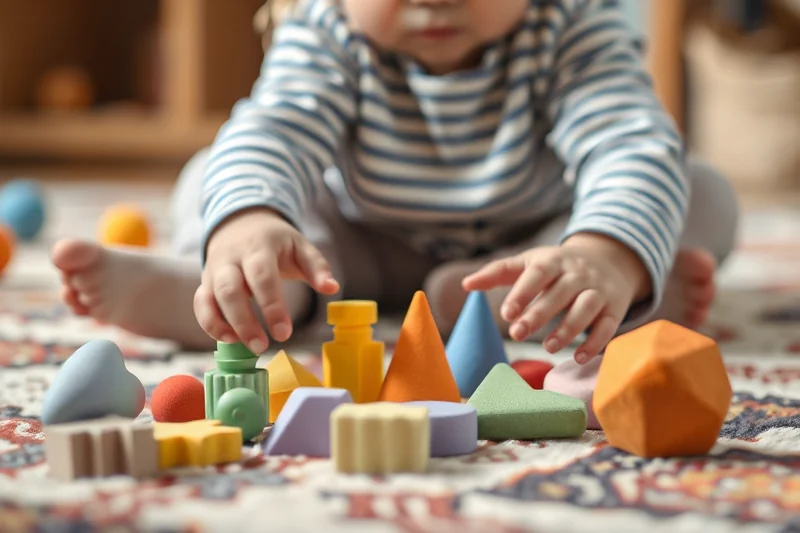
I used to think that fine motor skills were something you had to work on separately — like a lesson or a special activity. But the truth is, these skills can be developed through everyday play. When my daughter was playing with blocks, I realized that stacking them required more than just balance — it required coordination and precision. By encouraging her to build towers, sort shapes, and even knock them down, I saw her abilities grow.
Another way I incorporated fine motor development was through cooking. We started making simple recipes together, like mixing cookie dough or spreading butter on bread. These tasks required using small tools like spoons and tongs, which helped strengthen her grip and improve her hand-eye coordination. I was amazed at how quickly she picked up these skills when they were embedded in something she loved.
It’s all about making these activities feel natural and enjoyable. I’ve found that when my daughter doesn’t realize she’s practicing a skill, she’s more likely to stay engaged. Whether it’s sorting laundry, watering plants, or even cleaning up, these tasks are excellent opportunities to build fine motor skills without the pressure of a lesson.
Play is the language of childhood — and it's also the best teacher.
Related: Fine motor skills toys
The Power of Sensory Play in Fine Motor Development
I discovered the power of sensory play when I introduced my daughter to a bin filled with rice, beans, and small toys. She loved digging through it, trying to find hidden items, and using her fingers to scoop up the grains. It was amazing to see how her fingers moved with more confidence and control. These activities are not only engaging — they’re also great for developing strength and coordination.
Sensory bins can be customized to suit your child’s interests and developmental needs. I’ve used them to practice picking up small objects with tweezers, sorting items by color, and even using a magnifying glass to explore what’s inside. The tactile experience of feeling different textures helps build neural connections that support fine motor development.
One of the best things about sensory play is that it can be tailored to any age or ability level. Whether your child is just starting to grasp objects or they’re working on more advanced skills like pinching or pincer grasp, there’s a sensory activity that can help. I’ve used these bins with both my daughter and her younger cousin, and they’ve both benefited in different ways.
Experiment with different materials like sand, water, or even flour to create unique sensory experiences that challenge and engage your child’s hands.
“I remember the first time my daughter tried to hold a crayon.”— Grippylittle editors
Related: Simple fine motor skills activities
The Role of Repetition in Fine Motor Skill Development
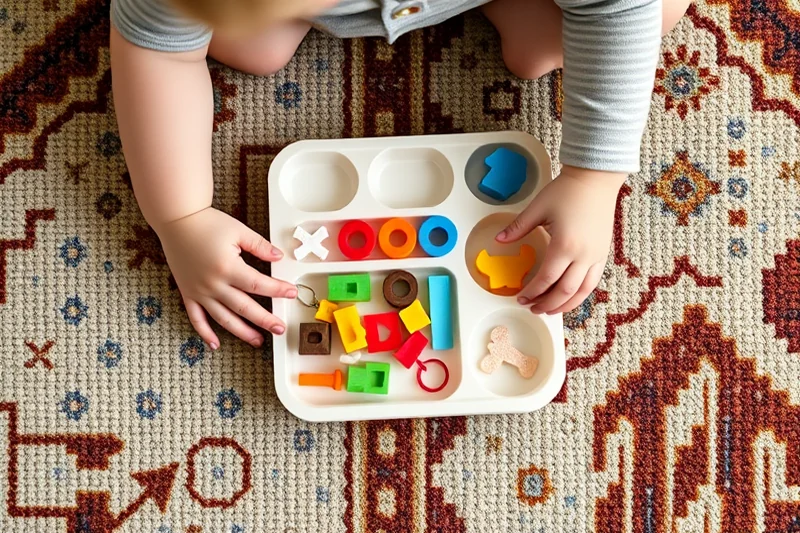
I learned the hard way that fine motor skills don’t develop overnight. When I first started working with my daughter on her grip, I was frustrated by how slow the progress seemed. But over time, I realized that the key to success was repetition. Each time she practiced, even if only for a few minutes, it helped reinforce the movements her brain and hands needed to build strength.
One of the most effective ways to ensure repetition is to make the practice fun. I’ve found that when my daughter is engaged and enjoying the activity, she’s more likely to stick with it. We play games like 'race to the finish' with beads or 'build a tower' with blocks — these simple challenges keep her motivated and give her a sense of accomplishment.
I also use a timer to keep things moving. We set a goal of 10 minutes and work on a specific skill, like using tongs to pick up objects or threading beads. The timer helps us stay focused, and the progress we see over time is incredibly rewarding. It’s not always quick, but it’s definitely worth it.[2]
Related: Fine motor skills activities
The Importance of Encouragement and Positive Reinforcement
I used to worry that if I didn’t push my daughter hard enough, she wouldn’t develop the skills she needed. But I quickly realized that the opposite was true — pressure and frustration only made things harder for her. Instead of forcing her to practice, I focused on making her feel proud of every small success. Whether it was a new grip, a better balance, or even just a smile, I made sure to acknowledge her progress.
Positive reinforcement has been one of the most effective tools I’ve used. When my daughter mastered a new task, I celebrated it with praise, a sticker, or even a short dance. These little moments of encouragement helped her build confidence and keep her motivated. It’s amazing how much more she’s willing to try when she feels supported.
I’ve also learned that it’s important to avoid comparisons. Every child develops at their own pace, and pushing them to match others can be discouraging. Instead, I focus on what my daughter is capable of right now and celebrate those moments. This approach has made all the difference in her attitude and willingness to keep trying.
⭐ Classic
The original play dough recipe with simple ingredients like flour, salt, and water.
💰 Budget
A cost-effective version that uses minimal ingredients and no food coloring.
⚡ Extra-Fast
Skip the kneading and use a food processor to make the dough in minutes.
✨ Depth
Add texture with items like cornmeal or oats to create a more sensory-rich dough.
🥗 Light
Use coconut flour and a splash of almond milk for a gluten-free, light alternative.
| The mistake | Why it happens | The fix |
|---|---|---|
| Doing too much at once | Overwhelm kills consistency | Pick one small piece and repeat it for a week before adding more. |
| Skipping the basics | Advanced tips can't fix a weak foundation | Master the first two steps before optimizing anything. |
What You'll Need tap to check off
- 1 lb all-purpose flour
- ½ cup salt
- ¼ cup baking soda
- 2 cups water
- 1 tablespoon vegetable oil
- food coloring (optional)
Method tap a step when done
- In a large bowl, mix together the flour, salt, and baking soda.
- Gradually add water, a little at a time, stirring until the mixture begins to form a dough.
- Knead the dough on a floured surface for about 10 minutes until it's smooth and elastic.
- Add vegetable oil and a few drops of food coloring if desired, then continue kneading until the color is evenly distributed.
- Store the play dough in an airtight container or plastic bag for up to a week.
- Use the play dough to practice squeezing, rolling, and shaping — all great fine motor activities for children.
Key Facts
Related: Preschool fine motor skill toys
Easy Build Fine Motor Skills
Related: Gross motor skills
Common Questions
Can I use this play dough recipe with a child who has sensory sensitivities?
How often should I use the play dough for fine motor skill development?
What if my child isn’t interested in the play dough?
Can I make this recipe without baking soda?
References
- Building fine motor skills and why it matters - MSU Extension (canr.msu.edu)
- Supporting Fine and Gross Motor Skills In and Out of the Classroom (extension.psu.edu)
- Fine Motor Skills Worksheets - DID YOU KNOW! (go-new.uta.edu)
- Building Fine Muscle Skills in Young Children (aces.edu)
- Fine Motor : U.S. Bureau of Labor Statistics (bls.gov)
Cite this guide
Grippylittle (2026). Easy Build Fine Motor Skills. https://grippylittle.com/easy-build-fine-motor-skills/
Feel free to cite or share this guide.