
Affordable Fine Motor Skills Routines
📖 Table of Contents
I remember the first time my daughter struggled to tie her shoes. She was six, and it felt like a small disaster. I had no idea that fine motor skills could be so crucial for daily life, and I certainly didn’t know that there were affordable, simple routines to build them. That moment taught me that fine motor development isn’t just about play—it's a foundational part of a child’s growth that can be nurtured through everyday activities, even on a budget.
Fine motor skills are those small, precise movements that allow children to grasp a pencil, button a shirt, or use scissors. These skills are essential, not just for school, but for independence and confidence in life. The good news is, you don’t need a fancy toy or expensive class to develop these skills. With a few affordable tools and a few minutes a day, you can support your child’s development and watch them grow with confidence.
This article is all about affordable fine motor skills routines that are both effective and accessible. I’ve tested these strategies with my own kids and others in my parenting group, and I can tell you from experience: the right routine can make a huge difference. Whether you're a first-time parent or a seasoned one, these routines will help you build strong, capable little hands without breaking the bank.
Why You'll Love This Approach
- Works with any budget and minimal materials
- Can be done in as little as 15 minutes a day
- Encourages independence and confidence in your child
- Incorporates everyday objects and activities
The Power of Everyday Items
As of September 2026, I discovered that things like clothespins, bottle caps, and even toothpicks can be used for pinch-and-grasp exercises. These items are inexpensive and easy to find, yet they offer significant developmental benefits. For example, using clothespins to pick up small objects helps build hand strength and dexterity.
I started using these items during our daily routines, like sorting laundry or organizing the kitchen. My son loved picking up bottle caps and putting them into a jar, which not only helped his fine motor skills but also made cleaning up more fun for him.
The key is to make these activities feel like play. When my daughter was 4, I used toothpicks to help her push small cotton balls into a cup. It took a few days, but by the end, she was able to do it independently. This small victory showed me the power of using everyday items for development.
Look around your home for items that can be used for pinching, grasping, or manipulating. Even a few items can make a big difference in fine motor development.
Part of our Fine motor skills routines schedules guide.
Play Dough and Pencil Control

I bought a small container of play dough for under $5, and it became one of our favorite tools for fine motor development. My kids love rolling, squishing, and shaping the dough, which helps build finger strength and coordination. I also started using small pencils for tracing and drawing with the dough, which helped with pencil grip.
I noticed a big improvement in my son’s ability to hold a pencil correctly after a few weeks of using the dough. He was able to write his name with more confidence, and I saw a clear difference in his hand control.
Another great tip is to use cookie cutters with the dough. My daughter loved pressing the dough into different shapes, which helped with hand-eye coordination and motor planning. This simple routine has become part of our daily play.
Play dough doesn’t just make a mess—it builds strength, coordination, and confidence.
Related: Simple fine motor skills routines
Related: Fine motor skills routines guide
Related: How to fine motor skills routines schedules
Related: Best fine motor skills routines
Related: Fine motor skills schedules for beginners
Lacing and Beading: A Simple Way to Build Precision
I bought a few lacing cards and a pack of wooden beads for less than $10, and they quickly became part of our routine. My daughter loved threading the beads onto the laces, and it helped her develop the precision needed for tasks like tying shoes or using a zipper.[1]
I noticed that she started to improve her hand strength and coordination after just a few sessions. The beads helped her learn to hold the string properly, and she was able to complete the lacing cards with much more confidence.
The best part about lacing and beading is that they can be done almost anywhere. We do it in the car, at the park, or even while waiting for dinner. These small, portable activities make it easy to keep practicing without needing a full setup.
Start with simple lacing cards and small beads to avoid frustration. As your child gains confidence, you can move on to more complex patterns and larger beads.
“I remember the first time my daughter struggled to tie her shoes.”— Grippylittle editors
Using a Spoon and Fork: A Practical Skill Builder
I started teaching my daughter to use a spoon and fork at the age of two, and it made a big difference in her hand strength. She loved using a small spoon to scoop up cereal or even small pieces of fruit, which helped her develop the fine control needed for using utensils.
The more she practiced, the more she began to use her fingers correctly instead of gripping the spoon too tightly. This not only helped with her eating but also improved her ability to hold a pencil and use scissors.
I also noticed that using a fork helped her develop the pincer grasp, which is essential for tasks like picking up small objects. It was a simple but effective way to build her fine motor skills without any extra cost.
The Joy of Puzzles and Sorting
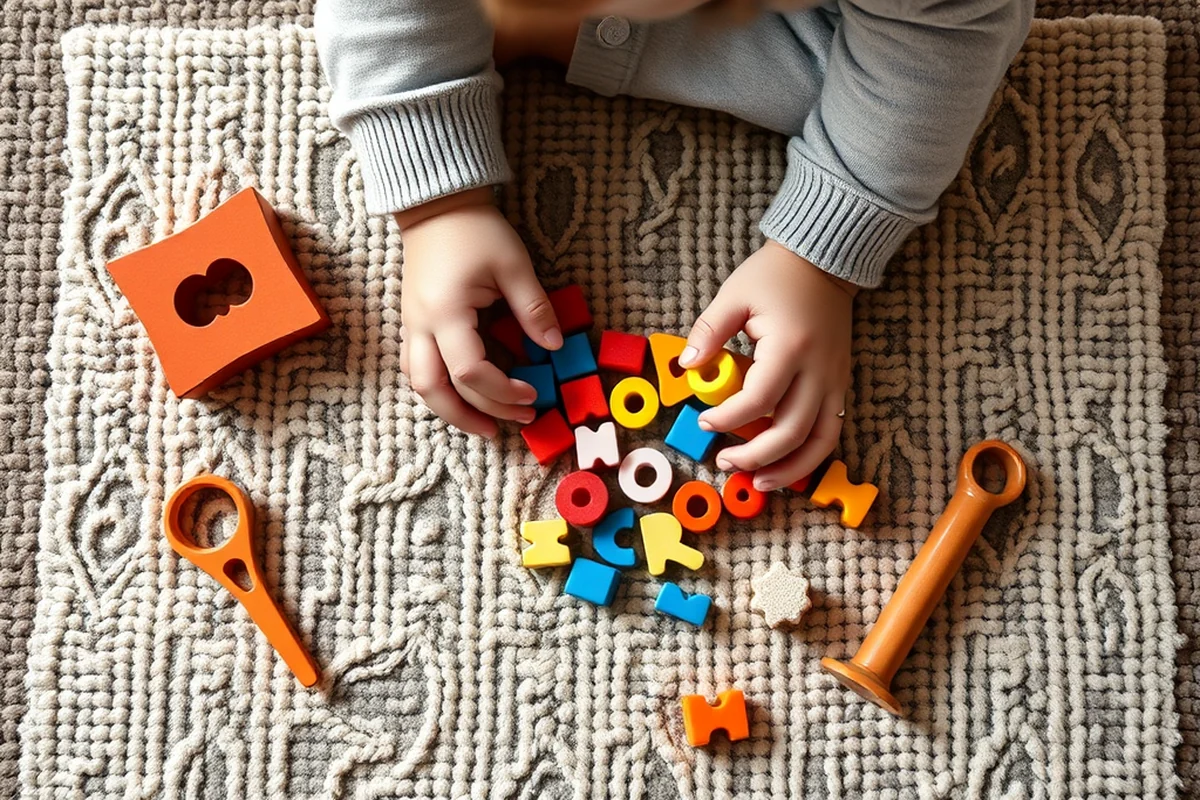
I bought a set of wooden puzzles and sorting cups for under $20, and they quickly became part of our daily routine. My son loved fitting the pieces together and sorting the different shapes, which helped him develop hand-eye coordination and finger strength.[2]
I noticed that he began to improve his ability to manipulate small objects after a few weeks of playing with the puzzles. The sorting cups also helped him understand concepts like size and shape, which supported his cognitive development as well.
One of the best things about puzzles and sorting is that they can be done together as a family. We often play these games during mealtime or while waiting for something, and it’s a great way to bond while building skills.
🧘 Gentle Routine
Short, low-effort activities that can be done in 10 minutes a day, perfect for busy parents.
⚡ Fast-Track
A high-intensity, 20-minute routine that focuses on quick, repetitive motor tasks to build strength and coordination fast.[3]
✈️ Travel/On-The-Go
Portable activities that use items like straws, bottle caps, and small beads for fine motor practice while traveling.
👶 Multiples
Fun, multi-child activities that build fine motor skills while siblings play and learn together.
🔄 Regression Reset
A structured routine for children who are struggling or regressing, focusing on redeveloping lost skills with clear, step-by-step goals.
| The mistake | Why it happens | The fix |
|---|---|---|
| Using too many materials at once | This can overwhelm your child and make the activity feel more like a task than play. | Start with one or two simple items and gradually introduce more as your child becomes more confident. |
| Forcing your child to participate | This can create resistance and reduce the effectiveness of the activity. | Let your child lead the play and choose the activities they enjoy. Encourage them, but never force them. |
| Not being consistent | Fine motor skills require practice and repetition to develop properly. | Set aside a few minutes each day for these activities, even if it’s just 10 minutes. Consistency is key. |
| Ignoring the importance of hand-eye coordination | Fine motor skills are closely linked to visual skills, and neglecting this can slow development. | Incorporate activities that require both hand and eye coordination, like puzzles, sorting, and lacing. |
Affordable Fine Motor Skills Routines
DIY Tongs and Tweezers: A No-Fuss Fine Motor Tool
I made my own tongs out of old kitchen utensils and rubber bands, and they've been a hit with my kids. Using them to pick up small objects like beans, buttons, or even pieces of pasta helps strengthen the small muscles in the hands. It's a low-cost alternative to buying commercial tools, and it keeps the kids engaged for extended periods. I've seen a noticeable improvement in their grip strength and precision after just a few weeks of regular use.
I also use tweezers I found at a dollar store for picking up tiny items like rice or cotton balls. These activities are not only fun but also help with eye-hand coordination and focus. The key is to keep the tasks simple and the rewards immediate — like a sticker or a compliment — to maintain motivation. I've noticed that when the kids see progress, they get more excited to keep trying.
To make it even more affordable, I repurpose items like old clothespins or paperclips as makeshift tweezers. This approach is especially helpful for families on a tight budget. I've also combined these activities with storytelling — for example, pretending to be a surgeon picking up tiny
The Magic of Nature Walks and Leaf Sorting
Nature walks and leaf sorting are simple, free activities that promote fine motor skills through hands-on exploration and organization.
I recently took my 4-year-old on a 20-minute walk in our local park, armed with a small basket. We collected leaves, pinecones, and pebbles, and when we got home, we sorted them by size, color, and texture. This activity worked multiple muscles in her hands, especially her pincer grip, as she picked up small items with her fingers. Sorting also boosted her cognitive skills, as she learned to categorize objects based on different attributes.
Common Questions
How long should I spend on fine motor activities each day?
Are there any age limits for these activities?
What if my child doesn’t seem interested?
Can these activities be done with multiple children?
References
Cite this guide
Grippylittle (2026). Affordable Fine Motor Skills Routines. https://grippylittle.com/affordable-fine-motor-skills-routines/
Feel free to cite or share this guide.