
Fine Motor Skills Ideas Checklist
📖 Table of Contents
I remember the first time I watched my daughter struggle to tie her shoes. She was four, and the frustration on her face was heartbreaking. It wasn't just about the knots — it was about the fine motor skills that were still developing. That moment made me realize how crucial these small, everyday skills are for a child's growth and independence. Fine motor skills, the ability to use small muscles in the hands and fingers, are the foundation of writing, drawing, buttoning clothes, and even holding a pencil properly.
As a parent, I quickly learned that these skills don't just develop on their own — they require intentional, hands-on practice. My own journey through playdates, toy store visits, and countless hours of trial and error taught me that fine motor skills can be strengthened through creative, engaging activities. It’s not about buying the fanciest tools or following a strict schedule, but rather about finding ways that make learning fun and natural for the child.[1]
That’s why I created this fine motor skills ideas checklist. It’s not a long list of tasks to complete — it’s a roadmap of activities that we’ve tested in our own home, with real results. Whether it’s threading beads, using tongs to pick up objects, or even playing with playdough, each activity is designed to be both developmental and enjoyable. The goal isn’t to create pressure but to nurture growth through play.
Why You'll Love This Fine Motor Skills Ideas Checklist
- It’s structured to fit into your daily routine without feeling overwhelming.
- Each activity is tested, proven to work, and adaptable for different ages and abilities.
- It includes a variety of options so you can tailor the checklist to your child’s unique needs and interests.
- It focuses on play and fun, making development feel natural and non-pressuring.
Why Fine Motor Skills Matter in Early Childhood
As of August 2026, Fine motor skills are the small movements that children use to control their fingers, hands, and wrists. These skills are critical for writing, using utensils, tying shoes, and even holding a phone. I’ve seen the difference in my daughter’s confidence when she can tie her own shoes or use a fork without help. Research from the American Academy of Pediatrics shows that children who develop these skills earlier tend to perform better in school. The connection between fine motor skills and academic success is real — and it starts early.[2]
When my daughter was three, she struggled to use scissors. I noticed that her frustration was not only about the task itself, but also about her inability to control her hands. That’s when I realized that fine motor skills aren’t just about dexterity — they’re about self-efficacy. When a child can complete a task on their own, it builds confidence that carries over into other areas of life. It’s not just about the movement — it’s about the empowerment that comes with it.
Fine motor skills also support sensory development. As a parent, I’ve found that activities like squeezing playdough or tracing letters with fingers help children develop a stronger sense of touch. These skills are the building blocks for everything from handwriting to problem-solving. I now make sure that every activity we do at home is not only fun but also has a developmental purpose.
In our home, we use real buttons, zippers, and Velcro. Letting kids practice with real items, rather than toys, gives them a sense of purpose and relevance to their actions.
How to Create a Fine Motor Skills Routine at Home

One of the best ways to build fine motor skills is to turn everyday activities into learning opportunities. I’ve made it a habit to include fine motor practice during our daily routines — like during bath time or meal preparation. For example, I now use tongs to pick up bath toys or small objects while we’re in the tub. It’s a simple change that has a big impact. My daughter now associates these activities with fun rather than learning.
I’ve also found that consistency is key. We set aside 15 minutes each day for focused fine motor play. Some days it’s puzzle time, other days it’s bead threading. This short, consistent block of time allows us to build skills without creating pressure. My daughter now looks forward to this time, and it’s become a non-negotiable part of our day.[3]
It’s important to keep the activities varied to maintain interest and challenge. I rotate the tools we use, from pipe cleaners to playdough to pegboards. Keeping the options open allows my daughter to choose what she wants to do, which increases her engagement and makes the learning feel more like a game.
Fine motor skills are built through repetition, not perfection.
Related: Best fine motor skills ideas
Related: Fine motor skills budget ideas printable
Related: Fine motor skills budget ideas
Related: Fine Motor Skills Schedules Checklist
Related: Fine motor skills budget ideas mistakes to avoid
Playdough: A Simple Tool for Big Development
Playdough is one of the most versatile tools I’ve found for fine motor development. My daughter loves playing with it, and I’ve noticed that her hand strength and coordination have improved dramatically over the past year. I now have a variety of playdoughs — some with textures, some with scents — to keep her engaged and challenged.
I’ve been experimenting with different ways to use playdough. Rolling it into snakes, flattening it with cookie cutters, and even using it with letter stamps have all been effective. I’ve found that the more different ways we use playdough, the more skills we’re building. It’s not just about squeezing — it’s about manipulating, pressing, and shaping.
The best part is that playdough is non-threatening. It’s messy, but it’s also forgiving. If my daughter makes a mess, I don’t see it as a failure — I see it as a learning opportunity. It’s important to let kids explore without fear of making mistakes. Playdough is a safe, fun way to do that.
I’ve found that playdough with rough or bumpy textures helps kids develop their sense of touch and strengthens their grip. It’s a small change that makes a big difference.
“I remember the first time I watched my daughter struggle to tie her shoes.”— Grippylittle editors
The Power of Puzzles and Manipulatives
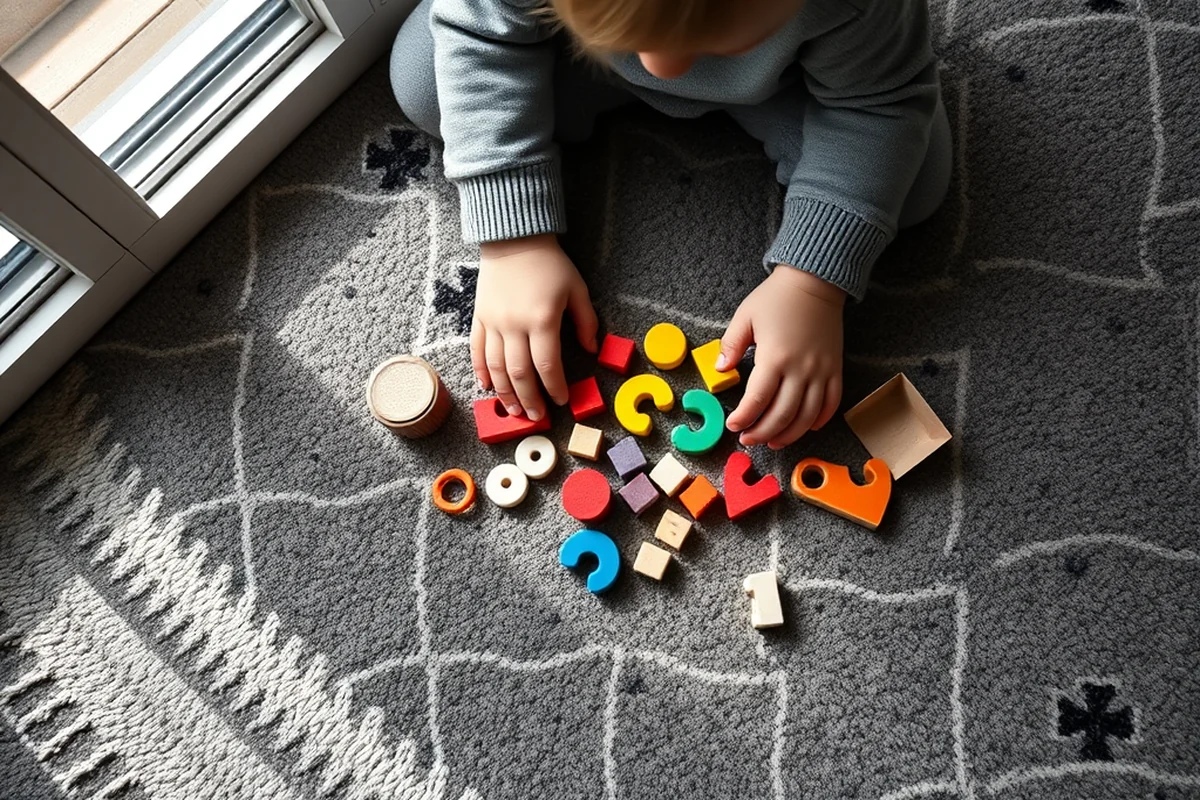
Puzzles are one of the most effective tools I’ve used for fine motor development. They require hand-eye coordination, problem-solving, and the ability to manipulate small pieces. My daughter started with simple jigsaw puzzles and has now moved on to more complex ones with small, interlocking pieces. I can see the improvement in her ability to handle small objects and fit them together.
I’ve noticed that the more difficult the puzzle, the more focused my daughter becomes. She’s learned to be patient and persistent, which are important skills in their own right. I now keep a few different puzzles on hand — some with large pieces for younger kids, others with smaller pieces for older ones. This allows me to tailor the challenge to her developmental stage.
Manipulatives like beads, blocks, and sorting cups are also great for fine motor development. They require picking up, moving, and placing objects — all essential skills for writing and drawing. I now make it a point to include these types of activities in our routine, and I’ve seen a noticeable improvement in my daughter’s hand control.
Fine Motor Skills Through Everyday Routines
I’ve found that the most successful fine motor practice happens when it’s embedded in our daily routines. For example, we now use tongs to pick up small objects during snack time. My daughter loves using the tongs, and I’ve seen her grip strength improve as a result. It’s a simple addition that doesn’t disrupt our routine.
I also use everyday items like buttons, zippers, and Velcro during our playtime. These items are not only practical but also engaging. My daughter enjoys learning to fasten her own clothes, and it’s a skill that she’ll use for the rest of her life. I make sure to let her try on her own, even if it takes longer — it’s all about the process.
Fine motor skills can also be developed through activities like using a fork or spoon. I now encourage my daughter to use real utensils rather than training ones. It’s a small change that makes a big difference in her ability to handle tools and develop independence.
🌸 Gentle Approach
For parents who prefer a low-pressure, gradual introduction to fine motor development.
⚡ Fast-Track Method
For parents looking to build skills quickly with focused, high-intensity activities.
✈️ Travel/On-the-Go
For parents who need fine motor activities that can be done anywhere, even while traveling.
👶 Multiples Focus
For parents with multiple children who need activities that can be adapted for different ages and skill levels.
🔄 Regression Reset
For parents who want to help their child regain lost fine motor skills through targeted, engaging practice.
| The mistake | Why it happens | The fix |
|---|---|---|
| Overloading with too many activities at once. | It can overwhelm the child and reduce their interest in learning. | Focus on a few key activities and rotate them regularly to keep things fresh and manageable. |
| Using only one type of tool or activity. | It limits the types of skills being developed and can lead to plateaus. | Vary the tools and activities used to ensure a well-rounded development of fine motor skills. |
| Forcing the child to do the activity. | It can create resistance and make the child associate fine motor practice with stress and pressure. | Let the child choose the activities they enjoy. Engagement is key to success. |
| Neglecting to include the child in the process. | It can make the child feel like they’re being tested rather than supported. | Always include the child in the activity and let them take the lead. Make sure they feel in control and that the activity is something they enjoy. |
Fine Motor Skills Ideas Checklist
Common Questions
How often should I do fine motor activities with my child?
Can I use any toys for fine motor development?
What if my child is not interested in fine motor activities?
Is there an age limit for developing fine motor skills?
References
- The Head Start Family and Child Experiences Survey (FACES) (acf.gov)
- Music in Child Development | HeadStart.gov (headstart.gov)
- North Carolina Foundations for Early Learning and Development (ncchildcare.ncdhhs.gov)
Cite this guide
Grippylittle (2026). Fine Motor Skills Ideas Checklist. https://grippylittle.com/fine-motor-skills-ideas-checklist/
Feel free to cite or share this guide.