
Fine Motor Skills Stage Checklist
📖 Table of Contents
I remember the first time my son tried to pick up a small toy with his fingers and dropped it — again. It wasn't just frustration for him, but a clear sign that his fine motor skills were still developing. Fine motor skills are those tiny, often overlooked abilities that let your child grasp, pinch, and manipulate objects with precision. They're the silent foundation of everything from tying shoelaces to writing letters. And while it's easy to think of motor development in terms of big milestones like walking or running, the real magic happens in the small, everyday moments where a child learns to control their fingers and hands.
Fine motor skills are more than just a developmental phase — they're a critical part of your child’s growth that can be supported with the right tools and strategies. I've spent years observing how my children interact with their environment, from the way they hold a crayon to the way they stack blocks. And I've noticed that when parents are aware of the stages their children go through, they can tailor their support with real, meaningful impact. A fine motor skills stage checklist isn't just a list of tasks; it's a roadmap that helps you recognize when your child is ready to progress and when they might need a little extra guidance.[1]
This checklist isn't about rushing your child or pushing them beyond their readiness. Instead, it's a gentle guide that helps you understand the natural progression of fine motor skills and how to support them with practical, hands-on activities. From the first grasp at around three months old to the precise hand-eye coordination needed to use scissors, each stage is a building block for the next. I've seen the difference this awareness makes — and I want to help you see it too.[2]
Why You'll Love This Fine Motor Skills Stage Checklist
- It gives you a clear, stage-by-stage roadmap for your child's development
- It helps you spot early signs of delays or readiness for new skills
- It includes activities that are easy to do at home or on the go
- It's designed to support, not pressure, your child’s progress
What Are Fine Motor Skills and Why Do They Matter?
As of September 2026, Fine motor skills are the small, precise movements of the hands and fingers that enable children to perform tasks like picking up a tiny object, using a spoon, or writing with a pencil. These skills are the foundation of many everyday activities and are crucial for a child’s ability to explore the world.[3]
Developing fine motor skills early on helps children gain confidence in their abilities and supports their cognitive and social development. When a child can pick up a small object independently, it's a big step toward self-reliance and curiosity.
I've noticed that when my kids could grasp and hold objects reliably, their interest in playing with toys and exploring their environment increased dramatically. That's the power of fine motor skills at work.
Set up a small corner with soft blocks, squishy balls, and textured items to encourage grasping and squeezing. This makes playtime both fun and educational.
Part of our Fine motor skills by age stage guide.
Key Stages in Fine Motor Development
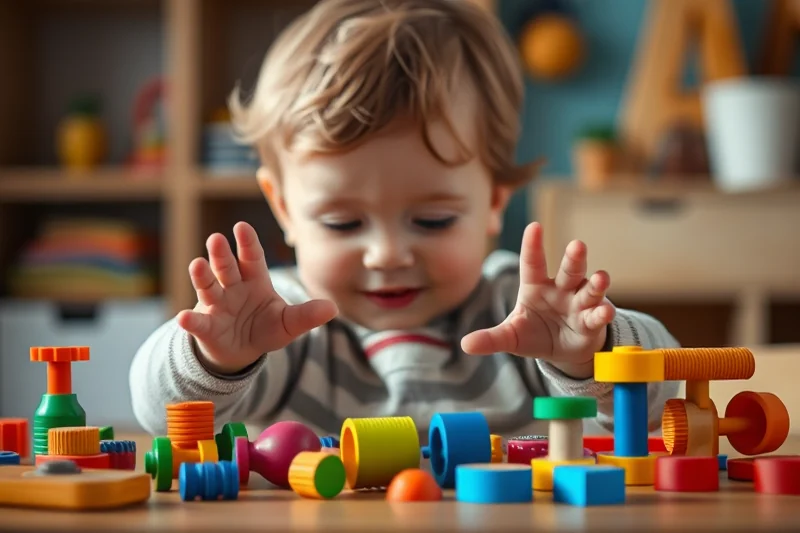
From the very first grasp at around three months old to the ability to use scissors at around five years old, each stage is a milestone that builds on the previous one. Understanding these stages helps you know what to expect and how to support your child’s development.
At six months old, your child might start using a pincer grasp — the ability to pick up small objects with the thumb and index finger. This is a critical skill that supports future writing and eating independence.
By the time a child is two years old, they should be able to stack blocks, use a spoon, and hold a crayon. These small achievements are big steps in their fine motor journey.
Development doesn’t happen in a straight line — it’s a zigzag of progress and regression.
Related: Fine motor skills stage on a budget
Related: Fine motor skills stage printable
Related: Fine Motor Skills Stage Examples
How to Support Fine Motor Development at Home
You don’t need expensive toys or elaborate setups to support your child’s fine motor development. Activities like threading beads, playing with playdough, or using tongs to pick up objects can all be done at home with minimal resources.
I’ve found that letting my kids use tongs to move objects from one container to another not only strengthened their hand muscles but also improved their coordination. It’s a win-win for both development and cleanup.
Other easy at-home activities include sorting small objects into containers, using tweezers to pick up items, or even just holding a pencil and making scribbles on paper. These moments are where real learning happens.
Encourage your child to use items like clothespins, straws, and small containers to build strength and coordination. These are affordable and easy to find.
“I remember the first time my son tried to pick up a small toy with his fingers and dropped it — again.”— Grippylittle editors
Related: Fine motor skills by age stage ideas
Related: Fine motor skills stage ideas
What to Do When Development Seems Slow
It’s not uncommon for some children to develop fine motor skills at a slower pace than others. If you feel your child is significantly behind their peers, it’s a good idea to consult with a pediatrician or occupational therapist.
I had a friend whose child was struggling with grasping and coordination. After a few sessions with an occupational therapist, they noticed a big difference in their child’s confidence and ability to manipulate small objects.
In the meantime, you can focus on activities that build hand strength and coordination, such as playing with putty, using a grip-strengthening toy, or practicing activities like buttoning shirts and zipping coats.
Related: Fine motor skills by age stage for beginners
Fine Motor Skills and the Role of Play
When children play, they’re not just having fun — they’re learning and developing in ways that are natural and effortless. Play allows them to explore their environment, manipulate objects, and practice the small hand movements that are essential for fine motor development.
I’ve seen my kids learn new skills simply by playing with blocks, stacking rings, or using a push-pull toy. These activities help them build the strength and coordination they need for more complex tasks.
Encouraging unstructured playtime with a variety of materials and textures can help your child develop their fine motor skills in a way that feels like fun rather than work.
🌱 Gentle Approach
A slow and steady method that focuses on comfort and exploration, ideal for sensitive or hesitant learners.
⚡ Fast-Track Method
A targeted, structured approach that focuses on quick progress through repetitive, goal-oriented activities.
✈️ Travel/On-the-Go
Activities that can be done anywhere, from airports to parks, making fine motor development part of everyday life.
👯 Multiples Method
Tailored activities that work for multiple children, helping each develop at their own pace while engaging together.
🔄 Regression Reset
A method used to support children who may be experiencing temporary developmental pauses or setbacks.
| The mistake | Why it happens | The fix |
|---|---|---|
| Assuming all children develop at the same rate | Every child has their own timeline for developing fine motor skills, and pushing a child too hard can lead to frustration and resistance. | Be patient and observe your child closely. Offer support when they're ready, not before. |
| Using only one type of activity for fine motor development | Limiting your child to one activity type can lead to stagnation and prevent them from exploring different ways to develop their skills. | Incorporate a variety of activities — from playdough to puzzles — to keep their interest and promote well-rounded development. |
| Ignoring the importance of sensory input | Fine motor development is closely linked to sensory experiences. Without proper sensory stimulation, development can be delayed or hindered. | Incorporate sensory-rich materials like textured fabrics, squishy toys, or items with different weights and temperatures into playtime. |
| Not allowing the child to take the lead | Forcing a child to complete an activity without their interest or engagement can reduce their motivation and make the experience feel like work. | Let your child choose the activity and lead the way. Follow their interests and support them with gentle guidance. |
Fine Motor Skills Stage Checklist
The Hidden Role of Sensory Input in Fine Motor Growth
Sensory experiences are crucial for fine motor development, yet often overlooked. Here's how they shape your child's progress.
I didn’t realize until my daughter turned three that her struggle with buttoning her coat wasn’t just about dexterity—it was about her sensitivity to touch. Her hands were overreacting to the texture of fabric, making small motor tasks feel overwhelming. This taught me that fine motor skills aren’t just about muscle control; they’re deeply connected to sensory processing. Children who are hypersensitive to touch might avoid activities like using scissors or holding pencils because they find the sensations uncomfortable or even painful. This can slow their development without obvious signs of motor delay.
When I introduced sensory play with squishy slime, textured balls, and even a sensory table with rice and beans, her confidence began to grow. These activities helped her brain learn to tolerate and even enjoy different tactile experiences. Over time, her ability to handle small objects improved, and she started to enjoy activities like threading beads and drawing. The key was to make these sensory experiences fun and non-threatening, allowing her to explore at her own pace.
I now make a point to incorporate sensory-rich activities into our daily routine, even if we’re not explicitly working on fine motor skills. For example, playing with playdough, cooking together, or even walking barefoot on different surfaces all contribute to her sensory integration. This approach has not only helped with fine motor development but also improved her focus and emotional regulation. It’s a reminder that sometimes the best way to support growth is to start with the senses—not just the movements.
Common Questions
What are some signs that my child may need extra support with fine motor skills?
How can I make fine motor activities more engaging for my child?
Is it normal for a child to skip a fine motor stage?
What are some easy activities I can do with my child to support fine motor skills?
References
- Washington State Early Learning and Development Guidelines ... (dcyf.wa.gov)
- Updating Age Determination Guidelines for Toys (cpsc.gov)
- EARLY CHILDHOOD MEASURES PROFILES - ASPE.hhs.gov (aspe.hhs.gov)
Cite this guide
Grippylittle (2026). Fine Motor Skills Stage Checklist. https://grippylittle.com/fine-motor-skills-stage-checklist/
Feel free to cite or share this guide.