
Fine Motor Skills Routines & Schedules

📖 Table of Contents
Fine motor skills routines and schedules are essential for children’s development, offering structured ways to improve hand-eye coordination, dexterity, and overall motor control. These routines are especially important for young children, as they lay the foundation for future academic and life skills, such as writing, buttoning clothes, and using utensils. Whether you're a first-time parent or an experienced caregiver, incorporating well-planned fine motor activities into your daily or weekly schedule can make a significant difference in your child’s growth.
Fine motor skills routines and schedules are more than just exercises—they are intentional, repeated practices that help children build strength, precision, and confidence in their hands and fingers. Research shows that consistent, short, and frequent practice is more effective than infrequent, long sessions. This makes it possible to integrate these activities naturally into a child’s day, even with a busy lifestyle.[1]
Creating a fine motor skills routine doesn’t require a lot of time or resources. It simply requires awareness, consistency, and a bit of creativity. By understanding the key components of a well-structured routine and schedule, parents can support their child’s development in a fun, engaging, and effective way. Start with fine motor skills routines checklist or fine motor skills routines ideas.
Key Takeaways
- Fine motor skills routines and schedules help children develop essential hand and finger strength, control, and coordination.
- Consistency and variety are key to creating effective and engaging routines that fit into a busy lifestyle.
- Simple, budget-friendly activities can be highly effective when done regularly and with intention.
- Printables and checklists can help parents organize and track progress, ensuring that no important developmental milestone is missed.
Checklists
As of July 2026, a well-designed checklist can help parents stay organized and focused on the most impactful activities for their child’s fine motor development. By listing specific tasks—such as using tongs, threading beads, or drawing with crayons—parents can ensure that their child is engaging in a variety of activities that target different skills.
Checklists also help track progress over time, allowing parents to see which activities their child enjoys and which may need more encouragement. For example, a checklist might include a section for ‘scissor skills’ and ‘buttoning,’ giving parents a visual representation of their child’s growth.
Incorporating checklists into a routine schedule can help maintain consistency, especially for working parents who need to make the most of limited time. Studies show that children who participate in regular, structured activities develop fine motor skills more effectively than those who engage in irregular or unstructured practice. For the full walkthrough, see fine motor skills routines checklist and fine motor skills routines ideas.[2]
In this guide:
In this guide:
In this guide:
In this guide:
- How to skill training
- Fine motor skills schedules for beginners
- Best fine motor skills schedules
- Affordable fine motor skills routines
- Budget fine motor skills schedules
- Affordable fine motor skills routines schedules
- Fine motor skills routines ideas
- How to fine motor skills routines schedules
- Fine motor skills schedules tips
- Fine motor skills routines schedules checklist
- Fine motor skills routines that actually work
- Easy fine motor skills schedules
- Budget fine motor skills routines
- How to fine motor skills routines
- Fine motor skills routines schedules guide
- Fine motor skills routines guide
In this guide:
- Fine motor skills schedules mistakes to avoid
- Best fine motor skills routines schedules
- Diy fine motor skills routines schedules
- Fine motor skills routines schedules examples
- Quick fine motor skills routines schedules
- Fine motor skills routines on a budget
- Simple fine motor skills routines
- Fine motor skills schedules checklist
- Fine motor skills routines checklist
For Beginners

Beginners should start with short, manageable activities that don’t overwhelm the child or parent. For example, a 10-minute session of picking up small objects with tweezers or using playdough to strengthen finger muscles can be highly effective.[3]
It’s important to focus on the child’s interest and engagement. If a child is not enjoying an activity, it’s unlikely to be effective. Starting with activities like stacking blocks or drawing with crayons can be a great way to build a foundation.
For parents new to fine motor development, it’s also helpful to consult resources such as pediatricians or developmental specialists. They can offer guidance on age-appropriate activities and help identify any potential concerns early. For the full walkthrough, see fine motor skills schedules checklist and fine motor skills routines on a budget.
Related: Easy Fine Motor Skills Printables
Related: Fine Motor Activity Under 30 Minutes
Related: Fine Motor Skills By Age & Stage
Related: Modern Different Fine Motor Skills
Related: Top Fine Motor Skills For Beginners
Related: Diy Fine Motor Skills Routines
Related: Quick Fine Motor Skills Routines
Related: Easy Fine Motor Skills Routines Schedules
Related: Simple Fine Motor Skills Routines Schedules
Related: Fine Motor Skills Routines Schedules For Small Spaces
Related: Fine Motor Skills Routines Schedules Mistakes To Avoid
Related: Fine Motor Skills Routines Mistakes To Avoid
Related: Fine Motor Skills Routines Examples
Related: Fine Motor Skills Routines Tips
Related: Fine Motor Skills Routines Schedules That Actually Work
Related: How To Fine Motor Skills Schedules
Related: Fine Motor Skills Routines For Small Spaces
Related: Fine Motor Skills Routines Schedules Ideas
Common Mistakes
One common mistake is introducing complex activities too quickly, which can lead to frustration for the child and a lack of progress. For example, trying to teach a toddler to use scissors before they have the strength to grasp a pencil can be counterproductive.
Another mistake is not allowing enough time for practice. Fine motor skills develop over time, and rushing the process can lead to burnout or disinterest. It’s important to keep sessions short and frequent, such as 10–15 minutes several times a day.[4]
Parents may also ignore the importance of repetition. Repeating the same activity multiple times helps reinforce learning and build muscle memory. A study from the American Academy of Pediatrics highlights the importance of repetition in early childhood development. For the full walkthrough, see fine motor skills routines schedules tips and simple fine motor skills routines.[5]
“Fine motor skills routines and schedules are essential for children’s development, offering structured ways to improve hand-eye coordination, dexterity, an”— Grippylittle editors
Examples & Ideas
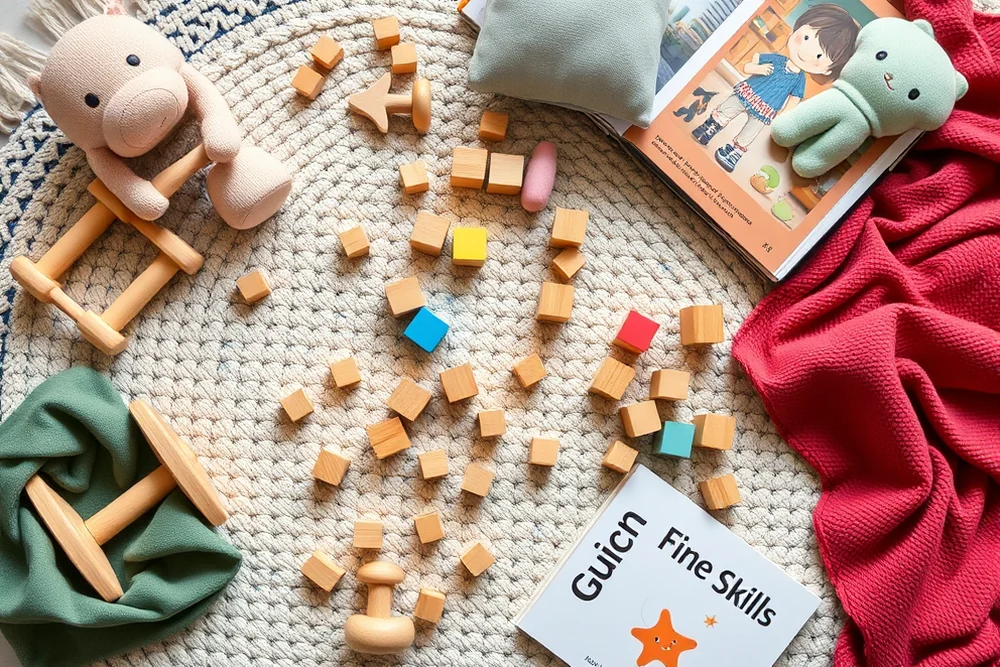
Simple activities like picking up small objects with tongs, threading beads onto a string, or using crayons to draw can be highly effective for developing fine motor skills. These activities are not only fun but also help build hand strength and coordination.
For older children, activities like cutting with safety scissors, writing with a pencil, or using a glue stick can be excellent ways to refine motor control. These activities also help develop the small muscles in the hands that are essential for writing and other academic tasks.
Incorporating pretend play, such as cooking with play food or dressing a doll, can also be a great way to practice fine motor skills. These activities are naturally engaging and allow children to practice real-life skills in a fun, imaginative way. For the full walkthrough, see quick fine motor skills routines schedules and budget fine motor skills routines schedules.
Budget-Friendly
Many fine motor activities can be done with everyday items found around the home, such as cotton balls, buttons, and straws. These materials are often inexpensive and can be reused multiple times.
Inexpensive toys like wooden blocks, playdough, and threading kits are also excellent options. These items are widely available at toy stores and online retailers and can be used for a variety of activities.
Creating a DIY sensory bin using rice, beans, or pasta and small objects to pick up with tweezers or tongs is another cost-effective way to practice fine motor skills. These bins can be made for under $10 and used for multiple sessions. For the full walkthrough, see fine motor skills routines schedules for beginners and fine motor skills routines schedules examples.
Printables
Printable checklists and activity cards are useful tools for parents who want to keep track of their child’s progress. These resources can be downloaded for free or purchased and printed at home, making them easily accessible.
Progress trackers, such as visual charts or calendars, can help parents see how often certain activities are being done and whether they are having an impact. This can also be motivating for children who enjoy seeing their achievements.
Many online resources offer printable fine motor development guides and activity sheets tailored to different age groups. These can be a helpful supplement to a parent’s routine and provide a structured way to approach skill development. For the full walkthrough, see diy fine motor skills routines schedules and fine motor skills schedules for beginners.
Small-Space Ideas
In small living spaces, it's essential to choose fine motor activities that are compact, portable, and easy to set up. Ideas like using small containers for sorting, stacking blocks, or playing with tweezers to pick up beads can be done on a small table or even a lap. These activities are ideal for toddlers and preschoolers, as they require minimal space and can be easily tucked away when not in use.
Another great small-space idea is to use vertical space by hanging a pegboard or placing a low shelf with small bins for organizing and retrieving fine motor tools. This not only saves floor space but also keeps materials within reach for children. You can incorporate activities such as threading beads, using tongs to transfer objects, or playing with putty, all of which can be done in a confined area without cluttering the space.
For families with limited room, consider using foldable or collapsible play mats and mats with built-in activity panels. These can be rolled up or stored easily when not in use. Additionally, integrating fine motor practice into daily routines—such as using a small cutting board for pretend cooking or practicing buttoning with miniature clothes—can make the most of small spaces without the need for dedicated play areas. For the full walkthrough, see best fine motor skills routines schedules and fine motor skills schedules mistakes to avoid.
Tools, Materials and Resources
Fine motor skills development relies on a variety of tools and materials designed to enhance hand strength, coordination, and control. Common resources include sensory playdough, tweezers, lacing cards, and puzzles, each targeting different aspects of motor development. These materials are widely available in toy stores, educational retailers, and online platforms, making it easy for parents to build a comprehensive toolkit at home.
In addition to physical tools, digital resources such as interactive apps and online tutorials can supplement traditional play. These tools often provide guided activities that encourage structured practice and progress tracking. For example, apps focused on drawing, tracing, or matching can be tailored to a child's developmental stage, offering both fun and functionality.
Parents are encouraged to explore a range of materials to find what resonates best with their child's interests and learning style. Including items that promote both gross and fine motor skills, such as art supplies or musical instruments, can create a well-rounded development experience. Investing in quality, safe materials ensures that children can engage in activities without risk of injury. For the full walkthrough, see fine motor skills routines guide and best fine motor skills routines.
Troubleshooting and Common Questions
Parents may notice signs of fine motor delays, such as difficulty using utensils, holding a pencil, or manipulating small objects. If a child is significantly behind peers in these areas, it may be helpful to consult a pediatrician or occupational therapist for an evaluation. Early intervention can make a significant difference in development outcomes.
It's common for parents to ask how often to practice fine motor activities and how long each session should last. Short, frequent sessions—such as 10–15 minutes several times a day—are often more effective than long, infrequent ones. Consistency and variety are key to keeping the child engaged and motivated.
Another common concern is how to make fine motor activities more enjoyable for children. Incorporating games, music, and storytelling can turn practice into play. Parents can also encourage peer interaction by organizing group activities, which can increase engagement and provide opportunities for social learning. For the full walkthrough, see fine motor skills routines schedules guide and diy fine motor skills routines.
Getting Started: Your First Steps
Begin by observing your child’s current fine motor abilities and identifying areas that need support. This self-assessment will help you tailor activities to their developmental level and interests.
Introduce simple, age-appropriate activities like playing with blocks, threading beads, or using tongs to pick up small objects. These tasks build coordination and strength while keeping the child engaged.
Establish a short, consistent routine—just 10–15 minutes a day—so your child becomes familiar with the activities and begins to see progress over time.
🌱 Beginner
The simplest version — minimal supplies, quick win.
💰 Budget
Same result using what you already have.
⚡ Quick
The 10-minute version for busy days.
✨ Advanced
The upgraded version once the basics stick.
| The mistake | Why it happens | The fix |
|---|---|---|
| Overcomplicating activities | Introducing complex tasks too early can overwhelm the child and lead to frustration. | Start with simple, age-appropriate activities and gradually increase difficulty as the child gains confidence. |
| Ignoring the child's interest | Activities that the child doesn’t enjoy are less likely to be effective or engaging. | Choose activities based on the child’s interests and preferences to ensure they are motivated to participate. |
| Not being consistent with practice | Fine motor skills develop through repeated practice, and inconsistency can hinder progress. | Incorporate short, frequent sessions into the daily or weekly routine to ensure regular practice. |
fine motor skills routines & schedules
Common Questions
What is a fine motor skills routines checklist?
What are fine motor skills routines schedules for beginners?
What are common mistakes to avoid with fine motor skills schedules?
What are some examples of fine motor skills routines schedules?
References
- Physical Development - Eastern (easternct.edu)
- PDF Physical Activity Toolkit for Preschool-Aged Children (fsnep.ucdavis.edu)
- 6.1 Motor Development - Lifespan Human Development: A Topical Approach (openbooks.library.baylor.edu)
- PDF Developing Fine Motor Skills (openlab.bmcc.cuny.edu)
- Fine motor skills and motor control networking in developmental age (pmc.ncbi.nlm.nih.gov)
Cite this guide
Grippylittle (2026). Fine Motor Skills Routines & Schedules. https://grippylittle.com/fine-motor-skills-routines-schedules/
Feel free to cite or share this guide.