
Fine Motor Skills By Age Stage Examples
📖 Table of Contents
I remember the first time my daughter tried to use a fork — her hand shook, the fork slipped, and she ended up stabbing the table. It was a moment of panic, but also a wake-up call. Fine motor skills aren't just about picking things up; they're about control, precision, and confidence. For parents, watching these skills develop is like watching a puzzle piece slowly fall into place. And understanding fine motor skills by age stage examples helps us know exactly what to expect — and how to support our kids through the process.
By the time children reach toddlerhood, their fine motor skills begin to take shape in ways that are both fascinating and essential. These skills are the foundation for everything from writing to dressing themselves. When I first started tracking my daughter’s progress, I was amazed at how quickly she went from grasping a rattle to manipulating small objects with increasing dexterity. It wasn’t just about development — it was about the kind of confidence that comes from being able to do things on your own.[1]
Fine motor skills by age stage examples are more than just a checklist; they’re a roadmap for what your child is capable of right now and what they’ll master next. I’ve learned that every age has its own quirks and milestones, and knowing them helps parents stay patient and involved. Whether it's stacking blocks or using a spoon, these small victories are what build the big picture of independence and growth.[2]
Why You'll Love This Guide to Fine Motor Skills by Age Stage Examples
- Gain concrete milestones to watch for at each age stage.
- Get actionable tips to support development at home.
- Understand how to track progress and celebrate small wins.
- Discover how to adapt activities to your child’s unique pace.
Age 0-6 Months: The Beginning of Grasping
As of October 2026, in the first six months of life, babies are still developing the neural pathways that will later allow for more complex fine motor skills. During this time, their hands are busy exploring the world through reflexes like the grasp reflex, where they automatically grip objects placed in their palms. I noticed this when my daughter would tightly hold my finger as I passed it over her hand — a reflex that begins to fade around 3 to 4 months.[3]
By around 3 to 4 months, babies start to develop voluntary control over their hands. This is when they begin reaching for objects and grasping them with purpose. I remember my daughter trying to grab a rattle from my hands; it wasn’t perfect, but it was a sign that her brain and muscles were working together in new ways.
It's important to provide safe, soft objects for babies to explore, like cloth books or rubber toys. These help them practice their grip strength and coordination. At this age, even the smallest movement is a big step toward future fine motor skills.
Offer soft, chewable toys for babies to grab, and keep small objects out of reach to prevent choking hazards.
Part of our Fine motor skills by age stage guide.
Age 6-12 Months: Reaching for More

Between six and twelve months, babies start using both hands to grab objects, a milestone known as bimanual coordination. My daughter started picking up small blocks with one hand and reaching for another with the other — it was a breakthrough moment that showed she was developing both sides of her brain.
During this stage, babies also begin to use their fingers more precisely. I noticed her picking up a Cheerio and bringing it to her mouth, a small but significant shift from the whole-hand grasping she used before. This kind of precision is essential for future skills like writing and using utensils.
To support this development, I made sure to provide plenty of small, easy-to-grasp objects and encourage her to pick them up. Simple activities like playing with finger puppets or stacking soft blocks helped her build confidence and control.
The first time she used both hands to grab a toy, I knew something important was happening.
Related: Fine motor skills by age stage mistakes to avoid
Related: Fine Motor Skills Stage Examples
Related: Fine Motor Skills By Age Stage Step By Step
Age 1-2 Years: The Rise of Precision
Between the ages of one and two, toddlers begin to develop the pincer grasp — using their thumb and index finger to pick up small objects. This skill is crucial for future tasks like holding a pencil or using a spoon. I remember watching my daughter use her fingers to pick up a tiny toy, her face full of concentration.
At this stage, toddlers also show more interest in activities that involve precise movements, such as stacking blocks or using crayons. I noticed her trying to draw a circle on a piece of paper, even though it looked more like a blob — but it was a start.
To encourage fine motor development at this age, I made sure to give her plenty of opportunities to practice. Coloring books, playdough, and puzzles helped her build the muscle control and coordination needed for more complex tasks.
Provide a variety of materials like crayons, playdough, and small blocks to help toddlers refine their pincer grasp and coordination.
“I remember the first time my daughter tried to use a fork — her hand shook, the fork slipped, and she ended up stabbing the…”— Grippylittle editors
Related: Fine motor skills stage step by step
Age 2-3 Years: Building Independence
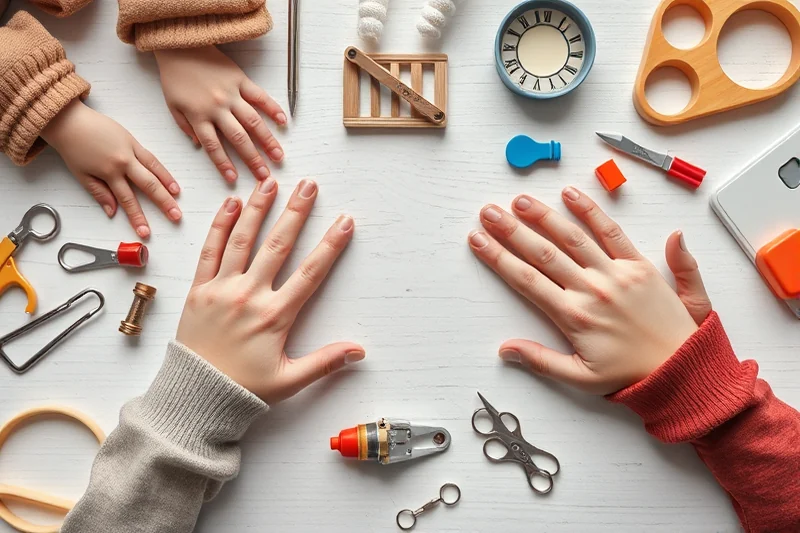
Between the ages of two and three, children start developing the ability to use scissors safely, which is a big step in fine motor skills. My daughter started using child-safe scissors to cut paper, and it was fascinating to watch her improve over time. Her first cuts were wobbly, but she was proud of every piece she made.
At this age, children also become more independent in tasks like buttoning clothes or zipping up a jacket. I remember the first time my daughter managed to fasten her own coat — it was a small victory, but it showed how far she had come.
To support this stage, I focused on providing activities that required both hand strength and coordination, like threading beads, using tongs to pick up objects, and playing with puzzles that required precise movements.
Related: How to fine motor skills stage
Age 3-5 Years: Mastery and Creativity
By the time children are between three and five years old, their fine motor skills have become much more refined. They can use scissors with greater control, write their names with increasing legibility, and engage in more complex tasks like drawing detailed pictures or using a pencil to trace shapes.
I noticed my daughter’s writing improved dramatically during this stage. She could now write her name and even draw simple pictures with a level of detail I hadn’t seen before. Her confidence grew as she realized she could create things on her own.
To support this stage, I made sure to provide a variety of tools like markers, crayons, and scissors, as well as activities that encouraged creativity and precision. Puzzles, building blocks, and arts and crafts were all part of her daily routine.
🌱 Gentle Approach
Focus on low-pressure play, like free drawing or playing with soft toys, to build confidence without stress.
🚀 Fast-Track Method
Use structured activities like tracing, cutting, and puzzles to accelerate fine motor development in a short time.
🧳 Travel/On-the-Go
Pack portable fine motor tools like small blocks, coloring books, and mini puzzles to support development while traveling.
👯♀️ Multiples Support
Use shared activities, like group puzzles or coloring together, to develop fine motor skills in multiple children simultaneously.
🔄 Regression Reset
Reintroduce basic fine motor activities like grasping or stacking to help children regain lost skills after a setback.
| The mistake | Why it happens | The fix |
|---|---|---|
| Not providing enough variety in activities. | A lack of variety can limit the types of movements a child practices, slowing down development. | Introduce a range of activities that involve different movements, such as grasping, pinching, and pushing. |
| Over-relying on technology. | Too much screen time can reduce the opportunities for hands-on play, which is essential for developing fine motor skills. | Balance screen time with hands-on activities that encourage movement and coordination. |
| Ignoring your child's pace. | Pushing too hard or too fast can lead to frustration and a loss of interest in developing fine motor skills. | Allow your child to explore and practice at their own pace, celebrating small progress along the way. |
| Not giving enough time for practice. | Fine motor skills require consistent practice to develop, and not enough time can slow progress. | Make time for regular, short sessions of fine motor activities throughout the day. |
Related: Fine motor skills stage mistakes to avoid
Fine Motor Skills By Age Stage Examples
Related: Fine motor skills stage printable
Age 5-7 Years: Refining Coordination and Dexterity
At ages 5 to 7, children refine their fine motor skills through complex tasks like tying shoes and drawing detailed pictures.
By age 5, kids are typically able to tie their shoes with some guidance, though it may take several attempts and practice. I remember my daughter taking about three weeks to master the bow, and she practiced every evening after dinner while watching her favorite show. This stage is all about patience and repetition, and parents can support their child by breaking the task into smaller, manageable steps. Providing a shoe-tying tutorial video or using a visual aid can make the process less overwhelming and more engaging.
At this age, children also demonstrate improved control over small objects. I’ve noticed that my son could pick up a single bead from a tray with tweezers by age 6, a skill that required several months of practice. Activities like threading beads, using scissors, and building with small LEGO bricks are excellent ways to challenge their dexterity. These tasks not only build hand-eye coordination but also boost confidence as they complete increasingly complex projects.
Fine motor skills at this stage also play a crucial role in academic readiness. My daughter’s ability to write her name neatly and hold a pencil correctly by age 6 made a big difference in her kindergarten experience. Parents can help by providing child-friendly writing tools and encouraging daily practice with tracing and drawing. It's important to avoid overcorrecting, as this can lead to frustration. Instead, focus on celebrating small improvements to keep the child motivated and engaged in learning.
Common Questions
When should I be concerned about my child's fine motor skills?
How can I support my child's fine motor development at home?
What are some signs that my child is developing fine motor skills well?
Can fine motor skills be improved through practice?
References
- Arizona's Infant and Toddler Developmental Guidelines (azed.gov)
- Developmental Milestones Table (depts.washington.edu)
- Infant - newborn development: MedlinePlus Medical Encyclopedia (medlineplus.gov)
Cite this guide
Grippylittle (2026). Fine Motor Skills By Age Stage Examples. https://grippylittle.com/fine-motor-skills-by-age-stage-examples/
Feel free to cite or share this guide.