
Fine Motor Skills Tips For Families

📖 Table of Contents
- The Power of Play: How Everyday Games Build Fine Motor Skills
- The Role of Sensory Play in Fine Motor Development
- The Hidden Benefits of Cooking with Kids
- Fine Motor Skills and the Importance of Practice
- How to Support Children with Special Needs
- Make It Your Way
- Frequently Asked Questions
- The Printable Activity Plan
I still remember the first time my daughter tried to use a fork without help — her fingers fumbled, the utensil slipped, and a small mess followed. It was both frustrating and enlightening. That moment taught me that fine motor skills aren’t just a developmental milestone; they’re the foundation of independence, confidence, and daily life. As a parent, I quickly realized that nurturing these skills early on could make a world of difference in how my child interacts with the world. Fine motor skills tips for families aren’t just about avoiding frustration — they’re about unlocking potential.[2]
Fine motor skills are the small, precise movements that our hands and fingers make, like buttoning a shirt, drawing a circle, or holding a pencil. These skills are crucial for everything from tying shoelaces to writing legibly. The good news is that there are countless ways for families to support their child’s development, and many of them can be done in the comfort of home with minimal time or cost. Whether you’re cooking together, playing with blocks, or simply encouraging your child to use both hands, every small action contributes to a bigger picture of growth and capability.[3]
The truth is, fine motor skills tips for families are not just about play — they’re about creating habits that last a lifetime. I’ve seen firsthand how children who engage in regular, purposeful activities improve in ways that go far beyond their hands. They become more confident, more focused, and more resilient. The key is to find activities that are both fun and meaningful, ones that your child will look forward to and that you’ll enjoy doing together. It’s not about perfection, but about presence, consistency, and connection.[4]
Why You'll Love This Guide to Fine Motor Skills Tips for Families
- You’ll learn practical, everyday ways to support your child’s development.
- You’ll discover how simple activities can lead to big improvements.
- You’ll gain confidence in your ability to make a difference.
- You’ll find strategies that work for all ages and abilities.
The Power of Play: How Everyday Games Build Fine Motor Skills
As of August 2026, I’ve discovered that even the most basic toys — like stacking rings or peg boards — can have a huge impact. My daughter used to struggle with picking up small objects, but after we started playing with wooden blocks, her grip became more refined. These activities are not only fun but also help kids understand cause and effect, which is crucial for cognitive development.[5]
I was surprised by how much progress she made in just a few weeks. We’d spend 10 minutes a day playing with her favorite blocks, and by the time we were done, she was able to pick up smaller items with ease. It was clear that the repetition and the challenge were helping her build muscle memory and confidence.[1]
The key is to make the activities engaging, not just repetitive. I’ve found that adding a bit of storytelling or turning a game into a challenge makes the experience more enjoyable. For example, we’d race to stack as many blocks as possible in a minute. It’s not just about the motor skills — it’s about the joy of learning together.
Get a set of wooden blocks or stacking rings. Set a timer for 5 minutes and have your child build as much as they can. Repeat this daily and track their progress. This simple activity builds hand-eye coordination and finger strength.
Part of our Fine motor skills guide.
The Role of Sensory Play in Fine Motor Development
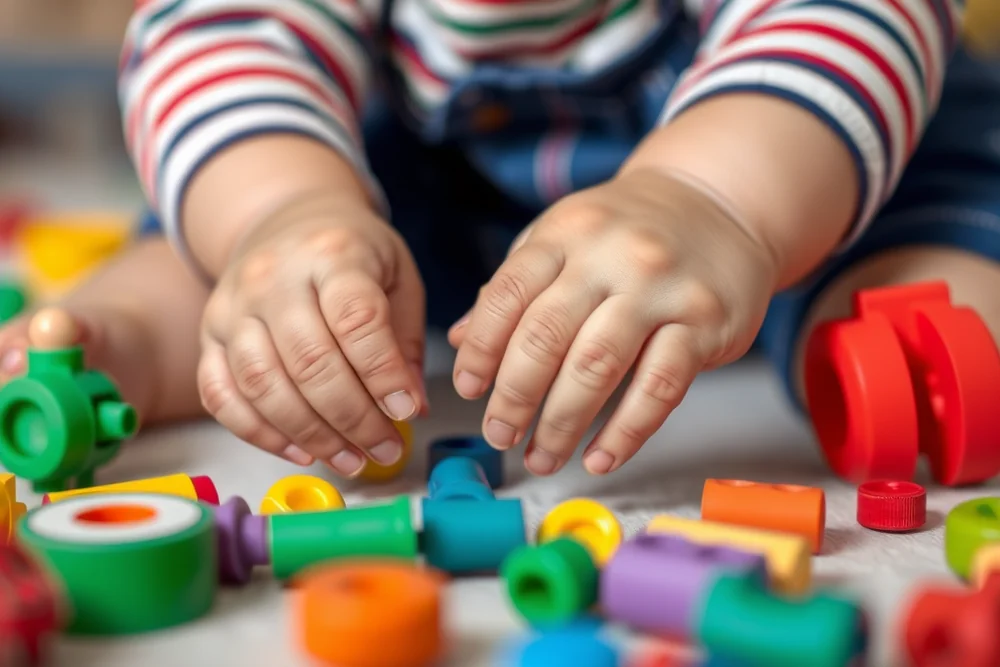
I never realized how much sensory play could do until my daughter started experimenting with playdough. She would press and roll it in her hands, and over time, her fingers became more dexterous. The texture of the playdough made her work harder, and the more she played, the more she improved.
We’ve also used a small bin of rice and wooden spoons, which helped her practice scooping and pouring. It was both educational and messy, but the improvement in her motor skills was worth it. She now uses both hands with more confidence, which is a huge step forward.
Sensory play doesn’t require a lot of money or time. A few simple materials — like rice, beans, or water — can create endless opportunities for exploration and learning. It’s amazing how much a child can develop when they’re just having fun.
Sensory play is like a hidden treasure — it builds skills without anyone even noticing.
Related: Easy crafts for fine motor skills
Related: Fine motor skill activities
Related: Affordable fine motor skills activities easy
Related: Simple fine motor skills ideas
Related: Modern different fine motor skills
The Hidden Benefits of Cooking with Kids
I’ve found that cooking together is a win-win situation. It’s not just about the food — it’s about the hands-on experience. My daughter used to struggle with using a spoon, but after we started making simple recipes like oatmeal or yogurt parfaits, her dexterity improved significantly.
We use a small ladle and measuring cups, and she’s now able to pour small amounts of liquid into a cup with precision. It’s been a delightful process, and the best part is that she’s learning without even realizing she’s learning.
Cooking together also helps build a sense of accomplishment. When she successfully pours the milk or mixes the ingredients, it boosts her confidence. It’s a small victory, but one that makes a big difference in her overall development.
Involve your child in simple cooking tasks like measuring, stirring, or pouring. Use small tools and focus on the process rather than the outcome. This builds confidence and coordination.
“I still remember the first time my daughter tried to use a fork without help — her fingers fumbled, the utensil slipped, and a small…”— Grippylittle editors
Fine Motor Skills and the Importance of Practice
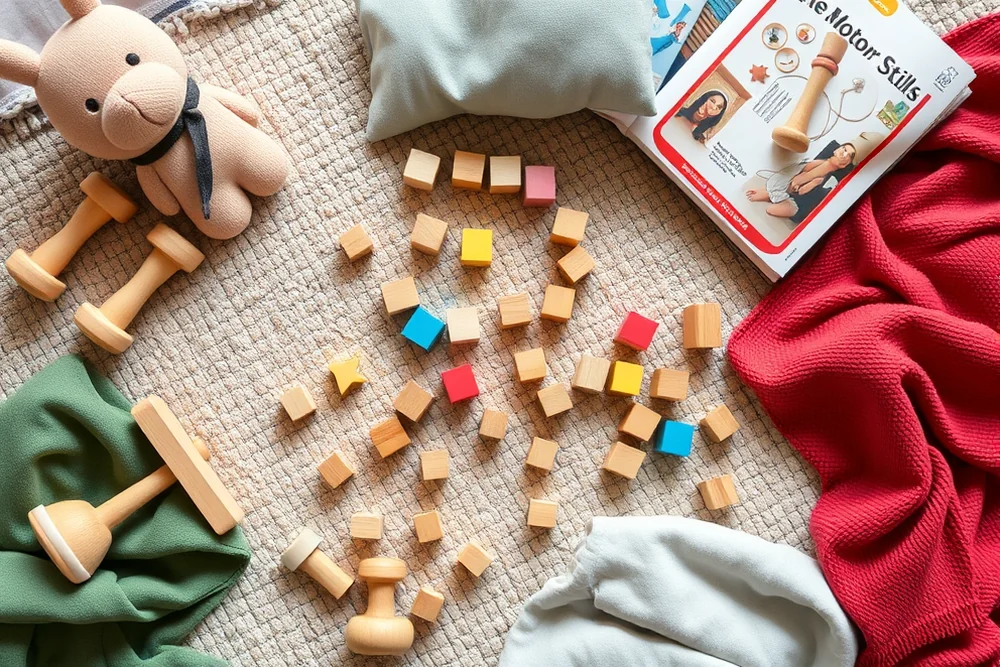
I’ve learned that fine motor skills don’t develop overnight. It takes time and repetition. My daughter used to get frustrated when she couldn’t tie her shoes, but after weeks of practicing with a shoelace board, she finally mastered it. The key was to keep it fun and not make it feel like a chore.
I’ve noticed that even small, daily activities — like picking up a pen or holding a spoon — can have a big impact. The more she practices, the more natural it becomes. It’s all about building the muscle memory through repetition.
It’s also important to be patient. Children develop at their own pace, and pushing too hard can lead to frustration. The goal is to create a positive environment where they feel supported and encouraged to keep trying.
How to Support Children with Special Needs
I’ve learned that children with special needs often benefit from adaptive tools and techniques. For example, my cousin’s daughter, who has Down syndrome, uses adaptive utensils that are easier to grip. These tools make eating and other fine motor activities more manageable for her.
I was shocked by how much of a difference these tools made. She used to struggle with using a regular spoon, but with the adaptive utensil, she was able to eat independently for the first time. It was a breakthrough moment for her family.
It’s also important to work with therapists or educators who can provide personalized recommendations. They can suggest activities and tools that are best suited to your child’s needs. Every child is different, and the key is to find what works best for them.
⭐ Classic
Basic playdough recipe that’s perfect for sensory play and motor skill development.
💰 Budget
Uses everyday ingredients and avoids expensive additives for an affordable option.
⚡ Extra-Fast
Quick version with fewer steps, ideal for busy parents who want to make playdough in under 10 minutes.
✨ Depth
Adds a layer of creativity with various colors and textures for more sensory engagement.
🥗 Light
A healthier version with less oil and more natural ingredients for a lighter, more nutritious playdough.
| The mistake | Why it happens | The fix |
|---|---|---|
| Not providing enough variety in activities. | Children can become bored or uninterested in fine motor activities if they’re too repetitive or lack variety. | Mix up the activities by incorporating different tools, textures, and challenges to keep things interesting. |
| Putting too much pressure on the child. | Fine motor development takes time, and pushing too hard can lead to frustration and a lack of motivation. | Be patient and celebrate small victories. Focus on the process rather than the outcome. |
| Ignoring the importance of practice. | Fine motor skills require repetition and practice to develop fully. Without consistent practice, progress can be slow or nonexistent. | Make practice a regular part of your routine. Even 10 minutes a day can make a big difference over time. |
| Not using the right tools for the child’s age or ability level. | Using tools that are too advanced or too simple for a child’s current skill level can hinder their progress or cause frustration. | Choose tools and activities that are appropriate for the child’s developmental stage. Consult with a therapist if needed for personalized recommendations. |
What You'll Need tap to check off
- 1 lb flour
- ½ cup salt
- ½ cup oil
- 1 cup water
- ½ teaspoon baking soda
- food coloring (optional) to taste
Method tap a step when done
- In a large bowl, mix together the flour, salt, and baking soda.
- Add the oil and stir until well combined.
- Gradually add the water, mixing until a dough forms.
- Knead the dough on a floured surface for about 5 minutes until it becomes smooth and elastic.
- If desired, divide the dough into portions and add food coloring to each portion, kneading until the color is evenly distributed.
- Store the playdough in an airtight container for up to a week.
Key Facts
Fine Motor Skills Tips For Families
Common Questions
What are the best toys for developing fine motor skills?
How long should children practice fine motor skills each day?
Can I use everyday items to help develop fine motor skills?
How can I encourage my child to practice fine motor skills without making it feel like a chore?
References
- Fine Motor : U.S. Bureau of Labor Statistics (bls.gov)
- Foundation: Fine Motor - Child Development (CA Dept of Education) (cde.ca.gov)
- Supporting Children's Development - Childcare.gov (childcare.gov)
- PDF Resource Guide: Child Development Resources for Parents and Providers (childcareta.acf.hhs.gov)
- ECIPs - Physical and Movement - Minnesota (education.mn.gov)
Cite this guide
Grippylittle (2026). Fine Motor Skills Tips For Families. https://grippylittle.com/fine-motor-skills-tips-for-families/
Feel free to cite or share this guide.